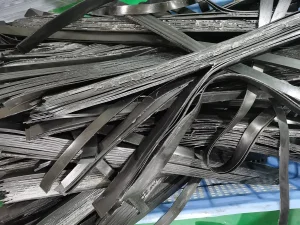
Explore our high-performance viscoelastic coatings, heat shrinkable sleeves, and corrosion prevention solutions engineered to perform under extreme industrial conditions.
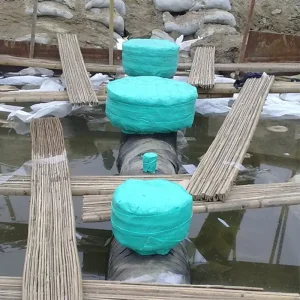
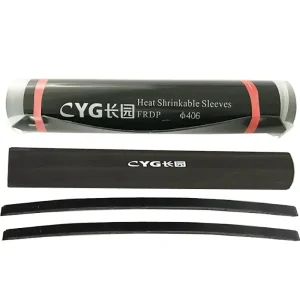
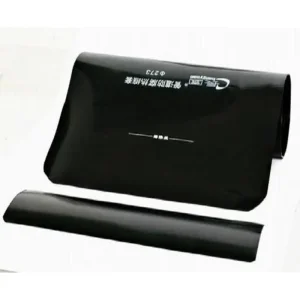
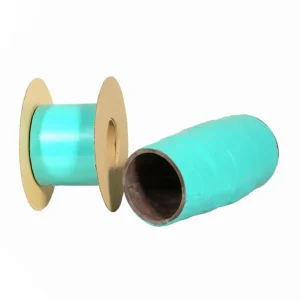
In modern pipeline engineering, subsea logistics, and heavy industrial plants, the management of electrochemical corrosion is a multi-billion dollar challenge. As pipelines pass through vastly different geomorphic terrains, the need for protective polymer wraps and thin-wall heat shrink tubing has escalated. Structurally speaking, thin-wall heat shrink sleeves and tubings provide mechanical shielding, environmental sealing, and dielectric insulation. They utilize cross-linked polymer technology that contracts upon applying heat, creating a tight structural barrier over critical substrates.
For decades, China's manufacturing sector has driven this space, transitioning from low-cost material output to advanced research, testing, and production. Standardizations such as ISO 21809 and the Association for Materials Protection and Performance (AMPP) guidelines dictate that materials exhibit exceptional tensile strength, thermal resistance, and chemical stability. As global industries demand higher performance, China's thin-wall heat shrink factories have upgraded their fabrication lines, integrating radiation cross-linking accelerators and automated adhesive extrusion systems to guarantee extreme consistency and long-term durability.
CYCT New Materials Company Limited (for short, CYCT) is a state-level high-tech enterprise integrating R&D, production and sales of pipeline corrosion protection materials as well as buried pipeline detection service and pipeline coating field application service into one. CYCT devotes itself to R&D, production and sales of pipeline corrosion protection materials for decades.
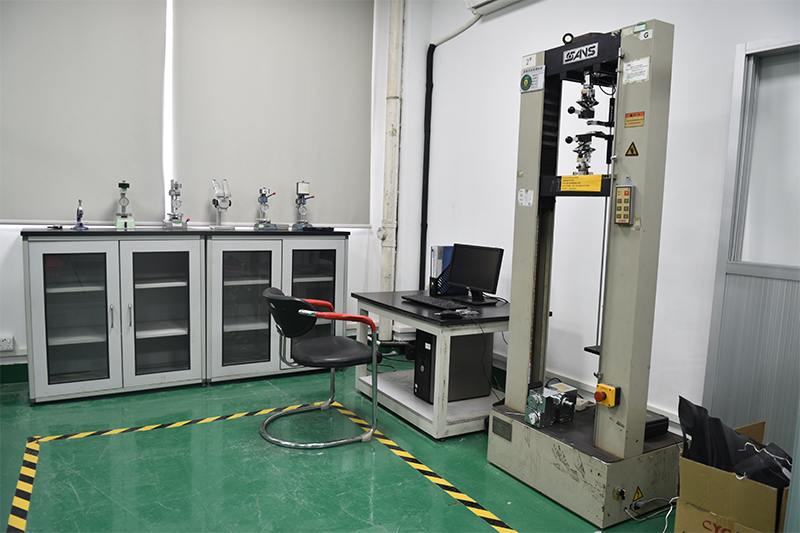
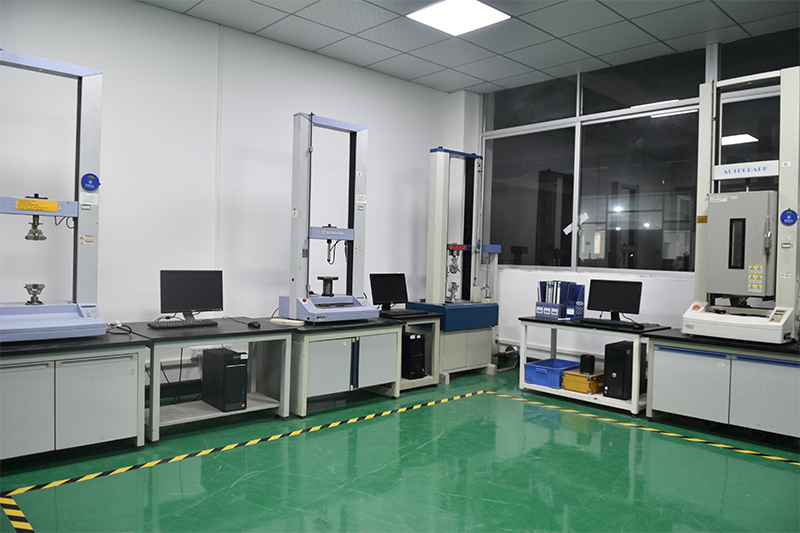
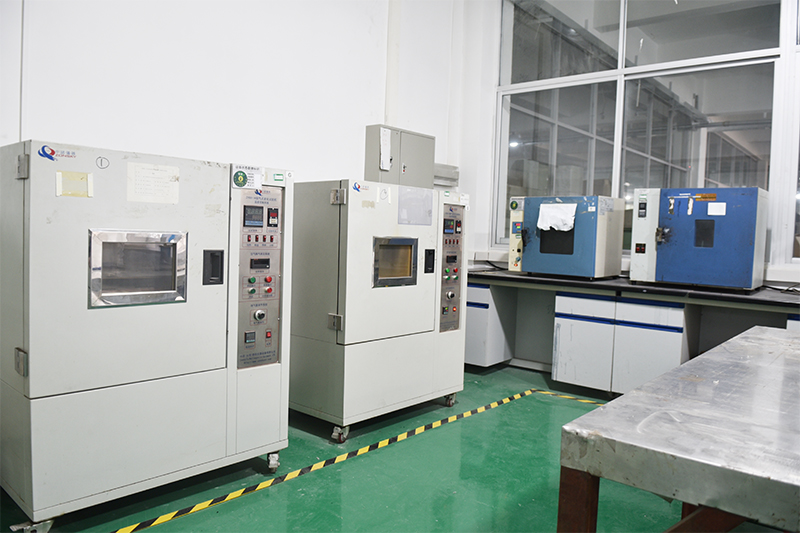
CYCT owns leading testing and R&D capabilities, a professional R&D team, and a national CNAS-accredited laboratory, enabling us to deliver world-class thin-wall polymer heat shrink sleeves and viscoelastic compounds globally.
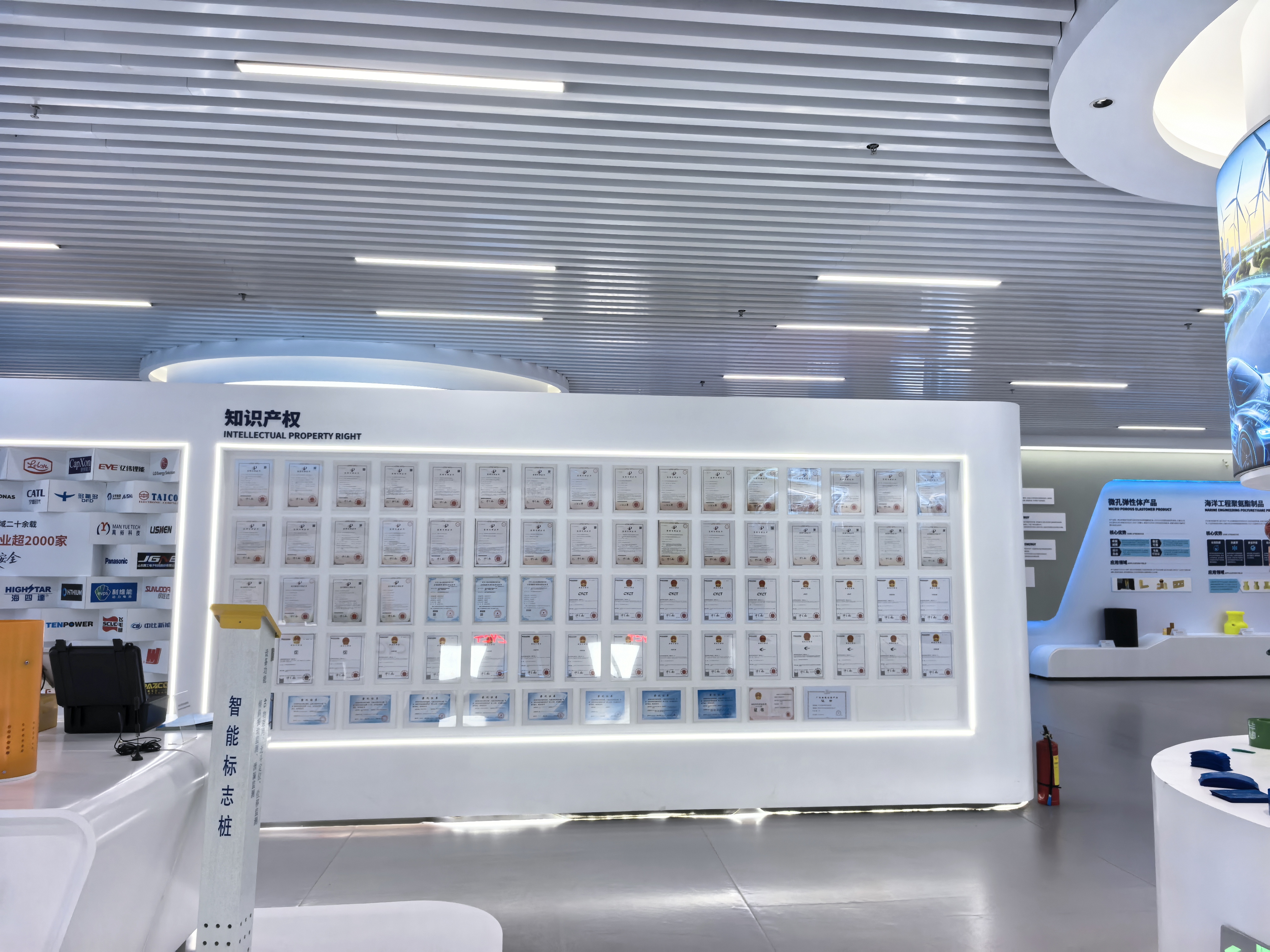
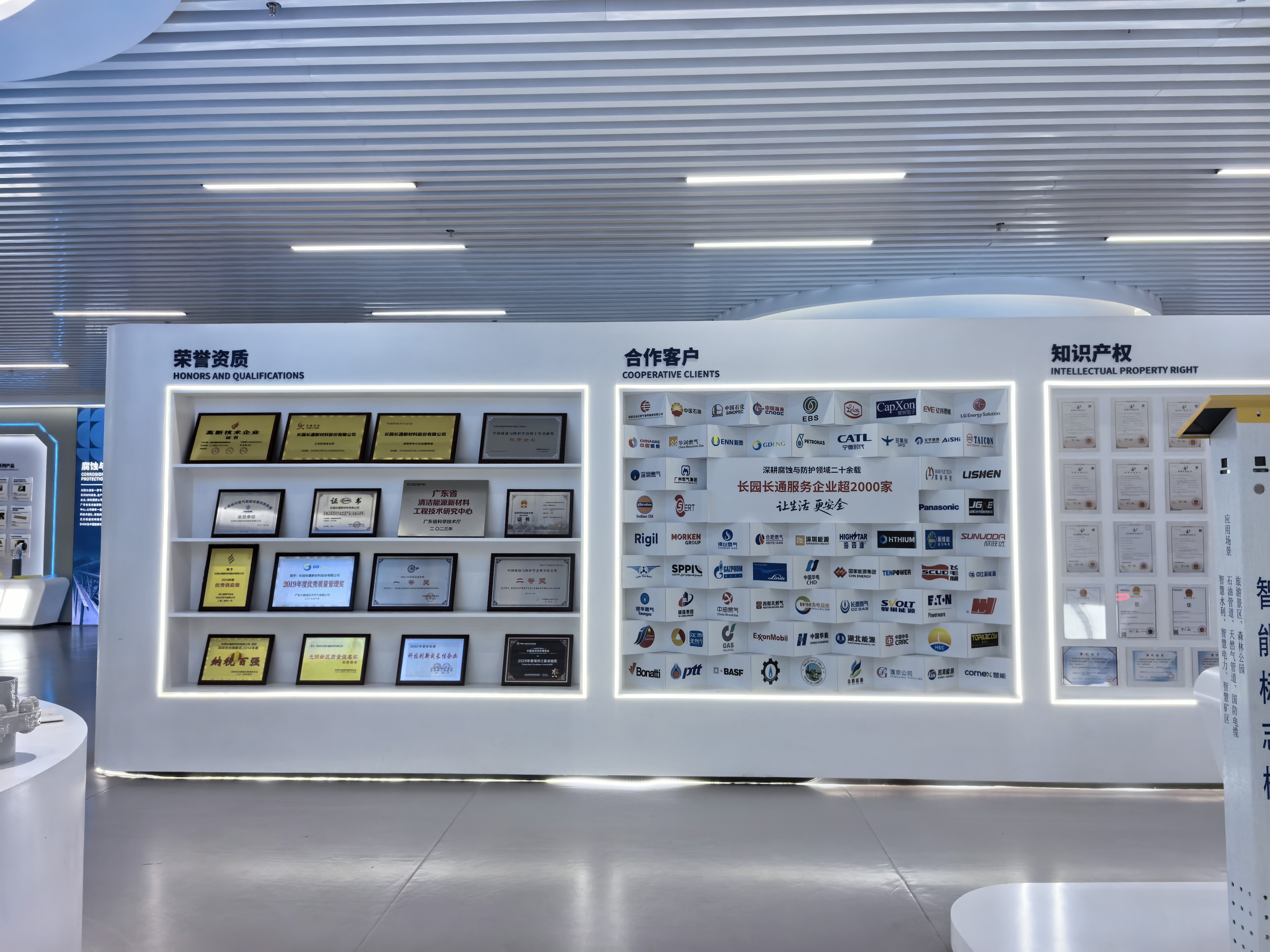
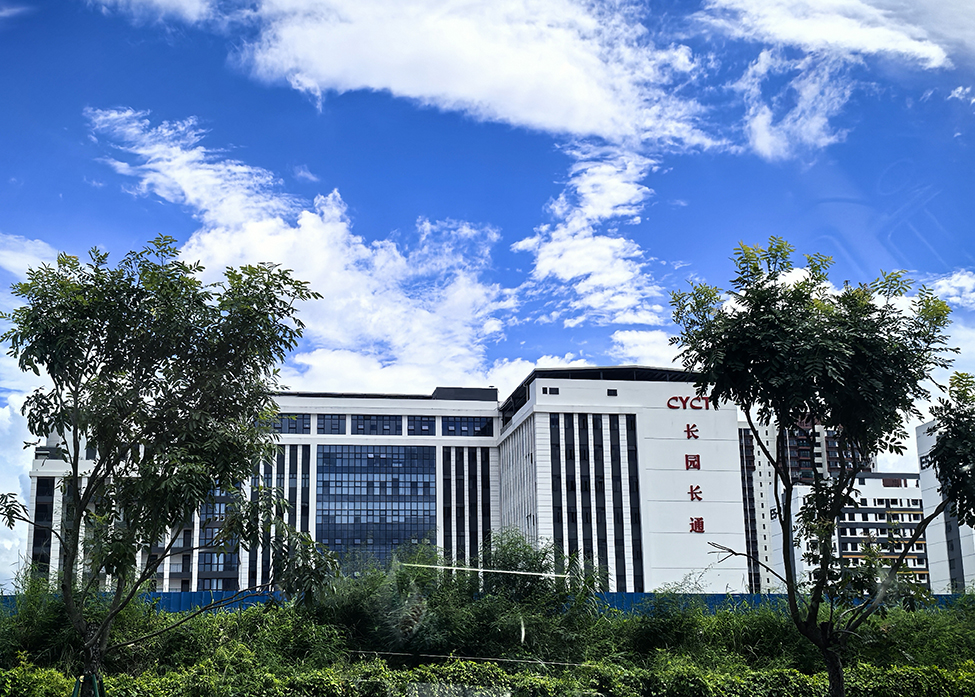
CYCT has established itself as a stable, long-term supplier of field joint coatings for years to prominent state enterprises including PetroChina, Sinopec, PipeChina, and various municipal pipeline initiatives, capturing a very high market share. In addition to our core structural polyolefin products, CYCT has successfully developed and introduced specialized corrosion protection solutions, including viscoelastic anticorrosion materials, special photo-curing sleeves for HDD protection, and polyurea coatings.
By partnering with leading R&D institutes such as the CNPC Pipeline Science Research Institute, CYCT is capable of providing in-service pipelines with varied technical services including buried pipeline detection, bespoke design schemes, cathodic protection, rehabilitation project execution, and integrated solutions for the safety protection of pipelines.
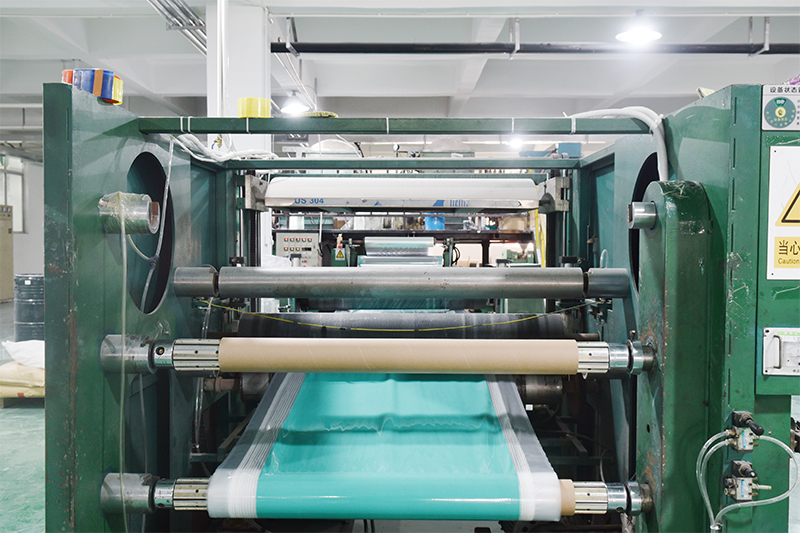
In municipal water infrastructure, cross-country oil pipelines, gas networks, and chemical plants, structural steel is subject to continuous environmental threats. The application of thin-wall heat shrink coatings and field joint sleeves plays an essential role in preserving these assets. During construction, mill-applied coatings like 3LPE (Three-Layer Polyethylene) or 3LPP (Three-Layer Polypropylene) must be stripped at the ends to allow for pipe welding. The resulting bare weld area—known as the field joint—is highly susceptible to corrosion.
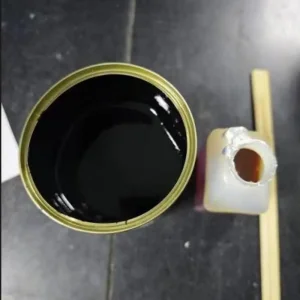
CYCT's integrated industrial solution involves applying a liquid epoxy primer to the steel surface, followed immediately by wrapping a heat-shrinkable sleeve (such as our FRDP 60C or FRDP 80C series). During heating, the inner hot-melt adhesive melts and flows into the steel's micro-crevices, while the outer cross-linked polyolefin backing shrinks tightly. This dual mechanism delivers mechanical protection, chemical resistance, and prevents water migration.
Complete anti-corrosion systems utilizing solvent-free epoxy primers combined with FRDP heat shrink sleeves, protecting girth welds up to 85°C operating temperatures.
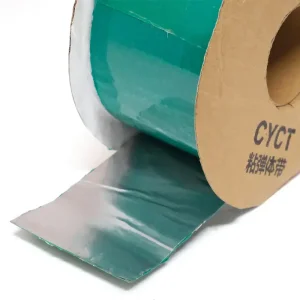
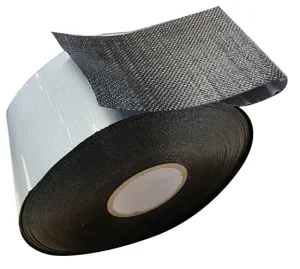
Viscoelastic self-healing coatings and putty that conform to irregular geometries, ensuring bubble-free protection for complex pipeline valves and flanges.
High-efficiency repairs for damaged PE or PP coatings using specialized hot melt sticks, fillers, and cold-applied PP outer wraps without shutting down operations.
The international market for pipeline corrosion mitigation is undergoing significant changes. Urbanization, offshore drilling, and regional energy initiatives are driving the demand for high-reliability polymer systems. Energy operators require materials that comply with strict global safety regulations, and many traditional systems fail to meet modern durability standards.
In this context, China-based manufacturers are crucial partners. Factories like CYCT offer a balance of advanced polymer chemistry, robust testing capacities, and scalable production. By keeping primary processing, formulation, and testing in-house, CYCT helps international procurement teams manage supply chain risks while providing custom solutions for specific regional requirements.
Global distribution requires careful planning, custom clearance coordination, and robust packaging to prevent material degradation in transit. CYCT coordinates with international freight networks to ensure our heat-shrink sleeves and viscoelastic tapes arrive at site locations in optimal condition.
As global projects look to diversify their supplier bases, partnering with an established supplier like CYCT—who serves PetroChina, Sinopec, and Indian Oil—provides a reliable alternative to Western manufacturers, offering equivalent performance at competitive commercial terms.
Different regions present unique environmental challenges for pipeline protection systems. Selecting the correct material configuration requires analyzing the local soil, temperature, and installation conditions.
Desert regions subject pipelines to high soil temperatures and shifting sands. Our high-temperature FRDP sleeves, stable up to 85°C, resist soil stress and thermal aging, preventing coating displacement.
Trenchless pipeline installations subject joints to severe shear forces. CYCT developed photo-curing sleeves specifically to withstand the mechanical abrasion of pulling pipes through rock and soil.
Marine environments present constant moisture and high salinity. Our viscoelastic tapes and primers provide strong barrier properties that resist cathodic disbondment under continuous water exposure.
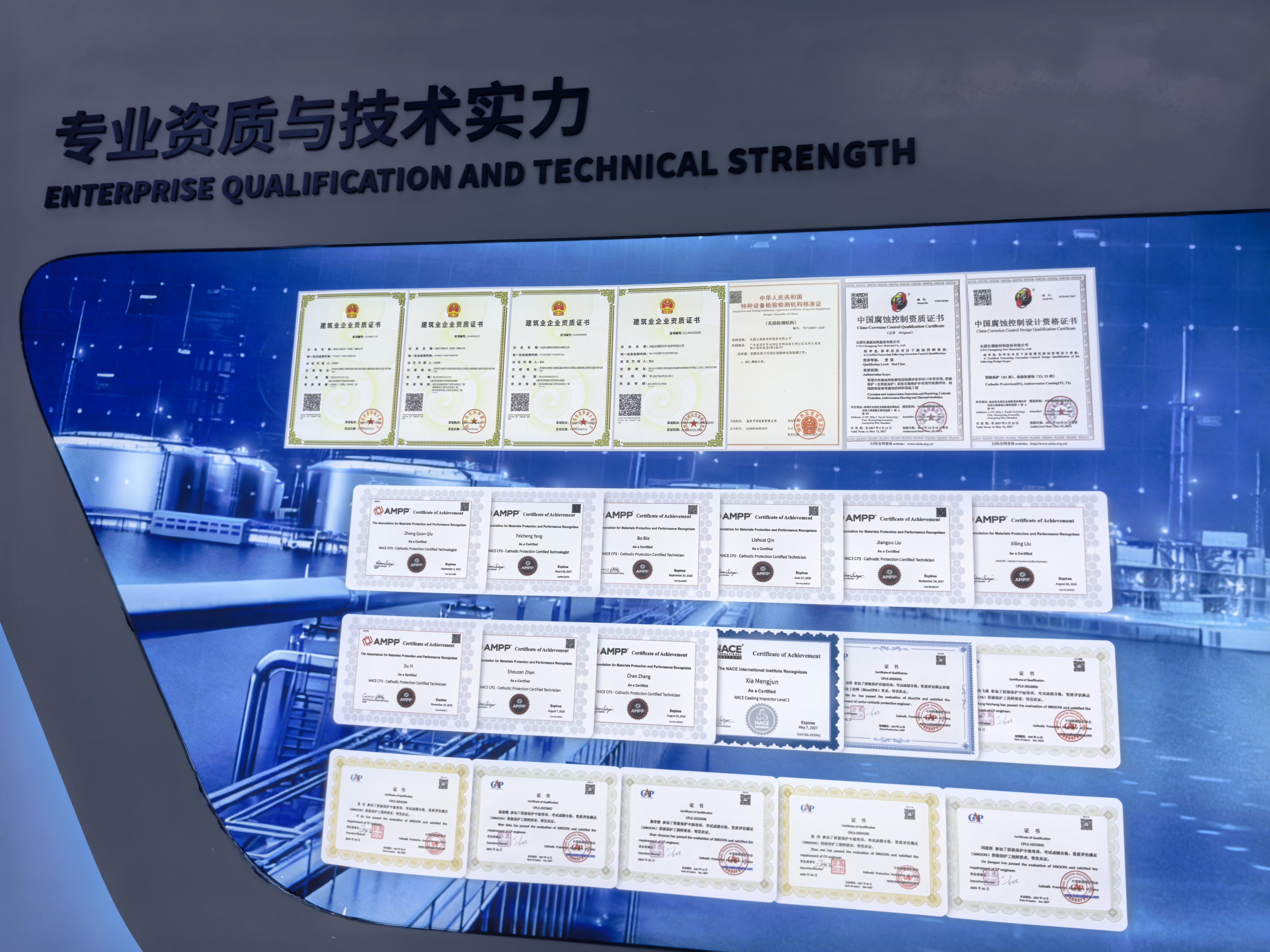
As a member of the Council in the Chinese Society for Corrosion and Protection (CSCP), CYCT operates under strict quality standards. We hold qualification certificates for corrosion protection construction and pipeline detection, and we maintain an active membership in the China Association of Petroleum Engineering Construction (CAPEC).
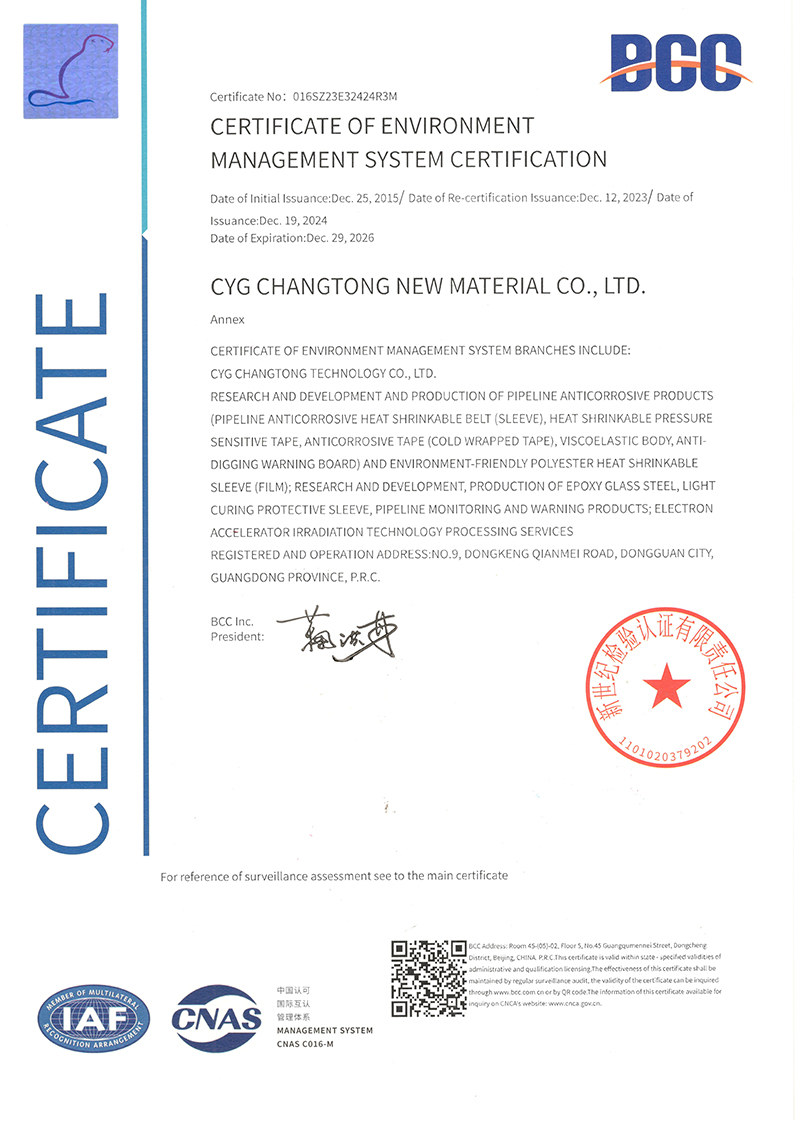
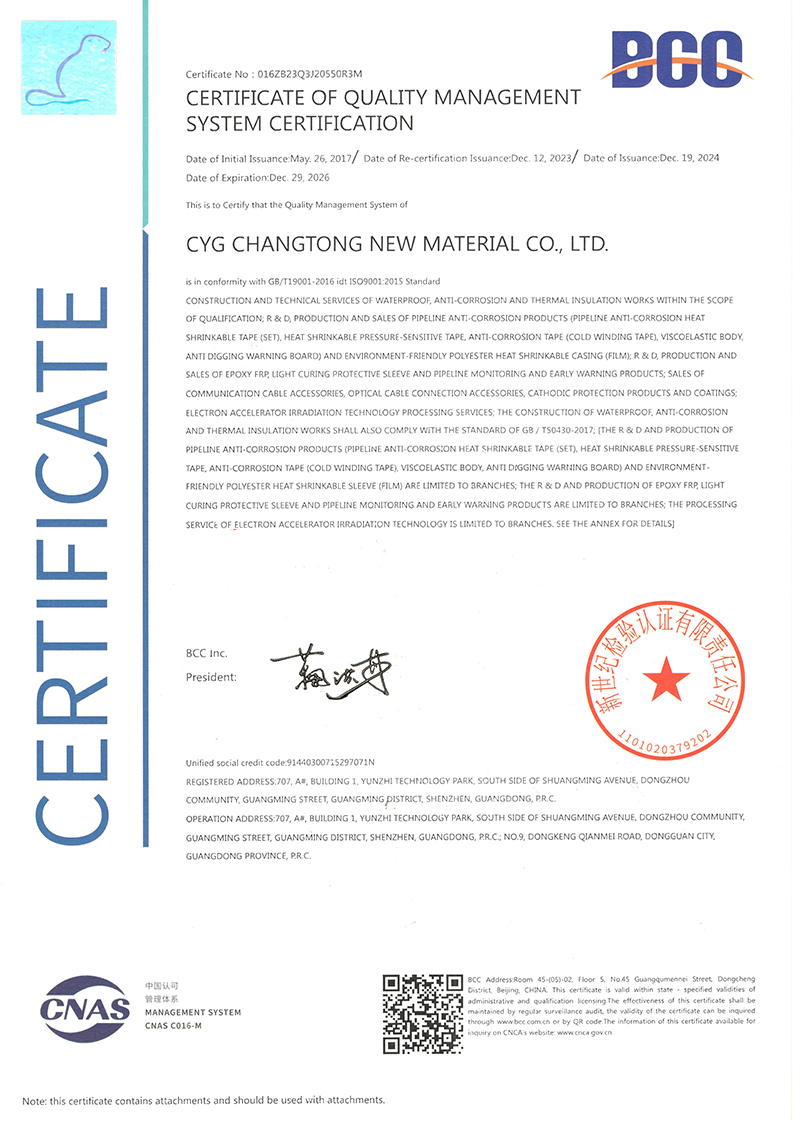
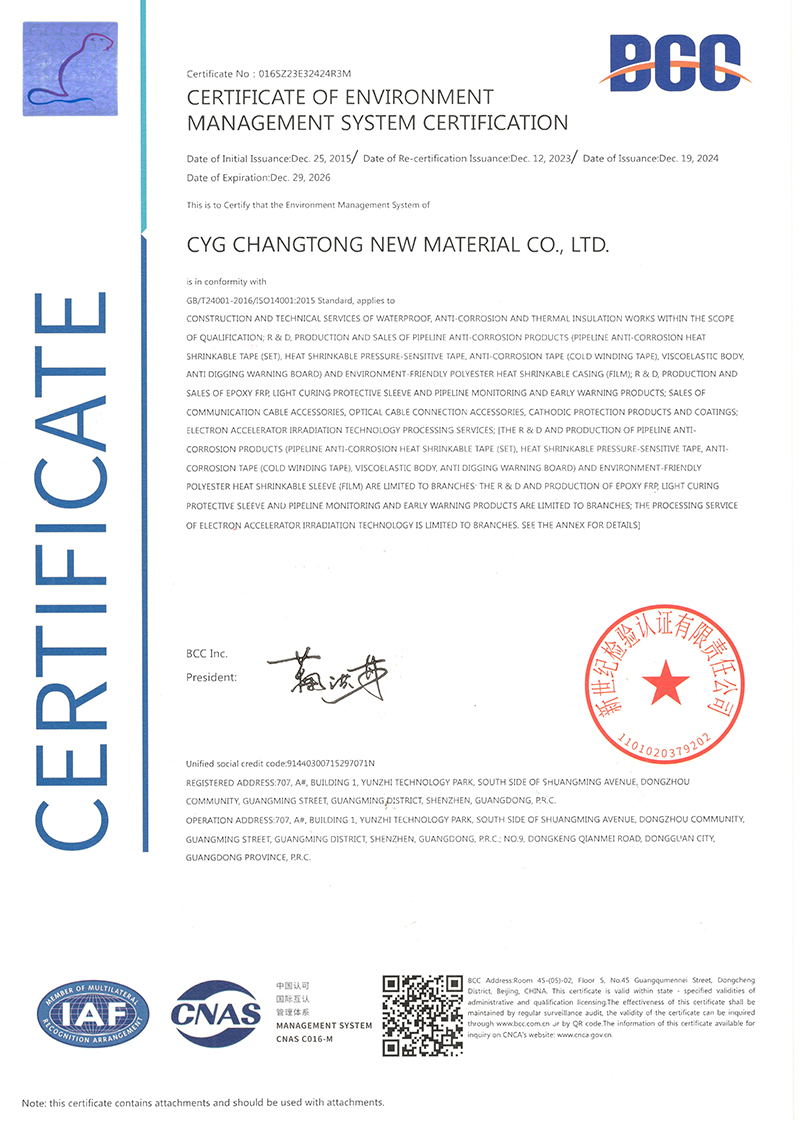
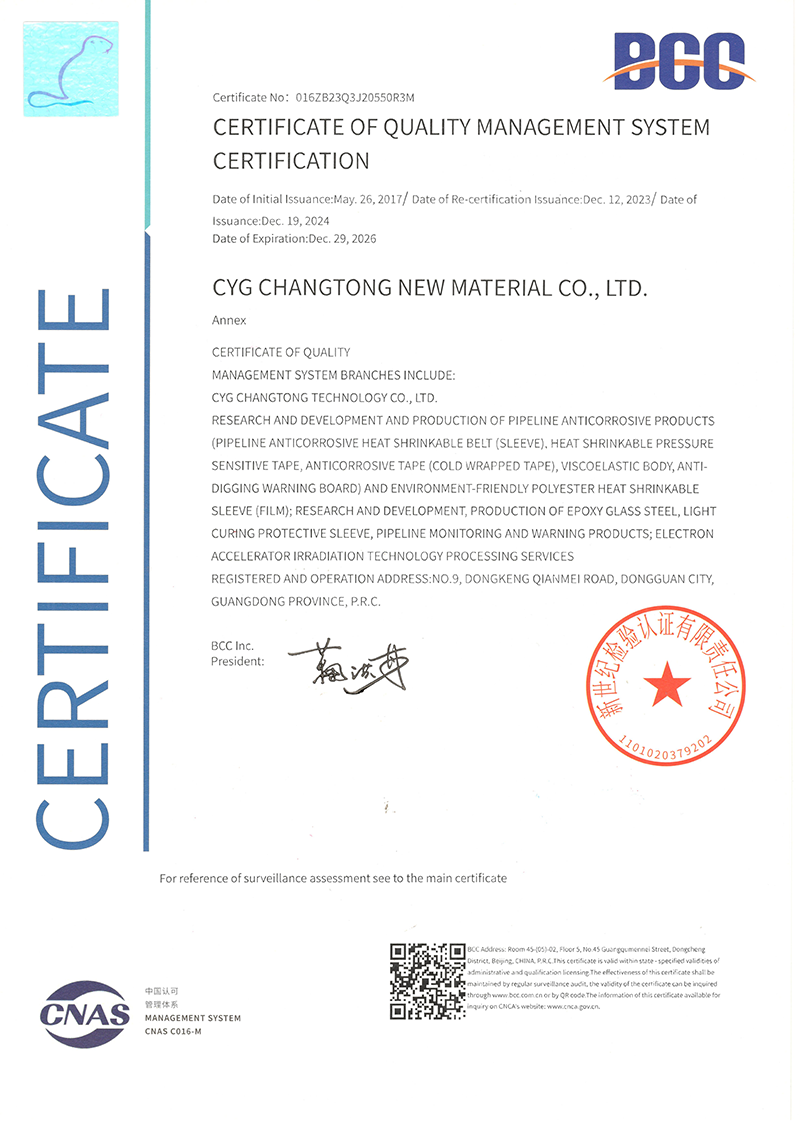
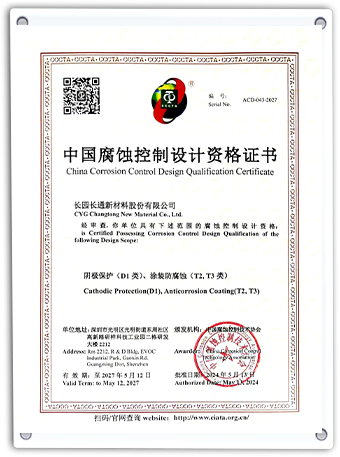
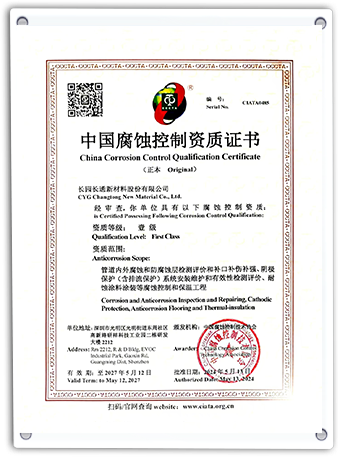
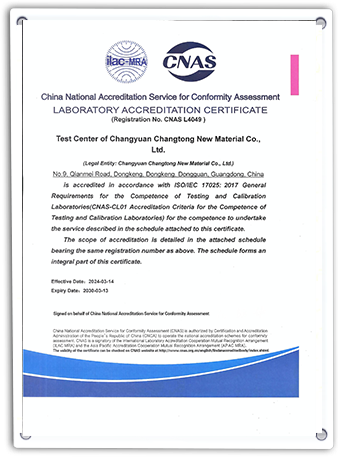
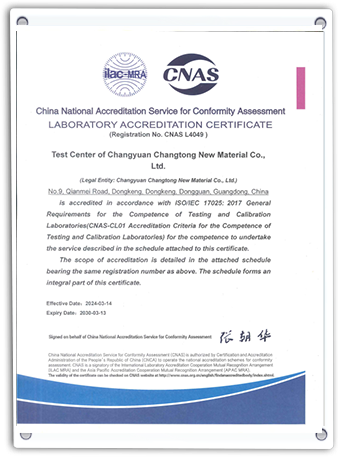
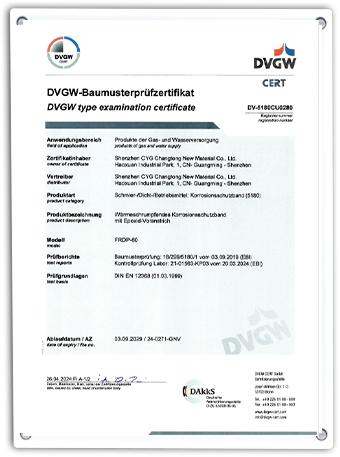
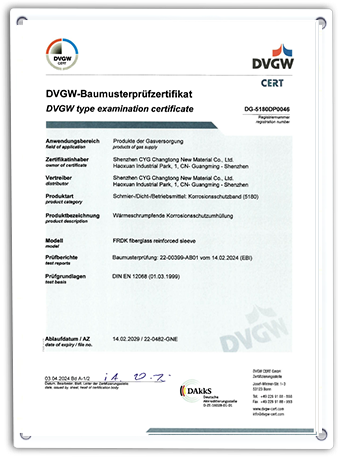
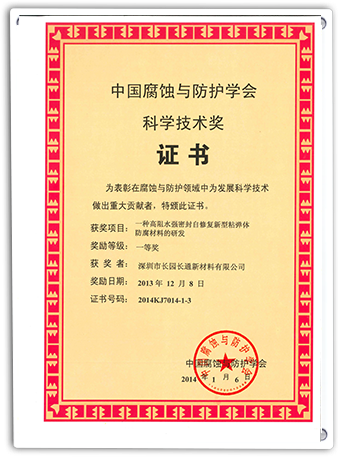
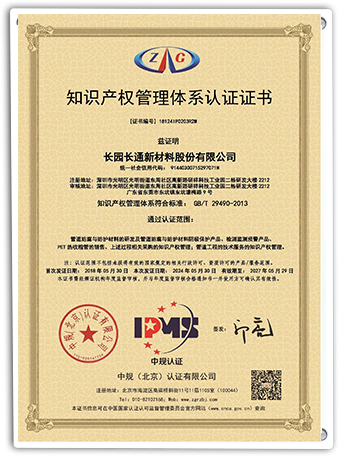
Our products are designed to meet international standards including ISO 21809-3, DIN 30672, and EN 12068. We also participate in the AMPP (formerly NACE/SSPC) standards framework. This systematic certification pathway ensures our materials deliver reliable performance throughout their service life.
As pipeline networks age and operational requirements become more complex, polymer science continues to advance. CYCT is investing in several key developmental areas:
Researching viscoelastic materials that can auto-seal minor mechanical abrasions or soil shearing, reducing the need for manual maintenance.
Developing solvent-free primer systems and low-emission manufacturing lines to align with carbon-reduction targets.
Extending the continuous operational temperature limit of our polyolefin coatings to 100°C for deep-well and high-pressure lines.
Gain technical insights regarding the applications, properties, and standards of thin-wall heat shrink coatings.
Discover our complete range of specialized tapes, hot-melt sticks, and composite wrapping systems designed for industrial infrastructure.
 CYCT
CYCT