Pioneering standard-compliant engineering materials supporting long-term pipeline structural reliability under extreme geological and thermal stress.
A state-level high-tech enterprise integrating R&D, advanced factory production, buried pipeline detection services, and pipeline coating application services.
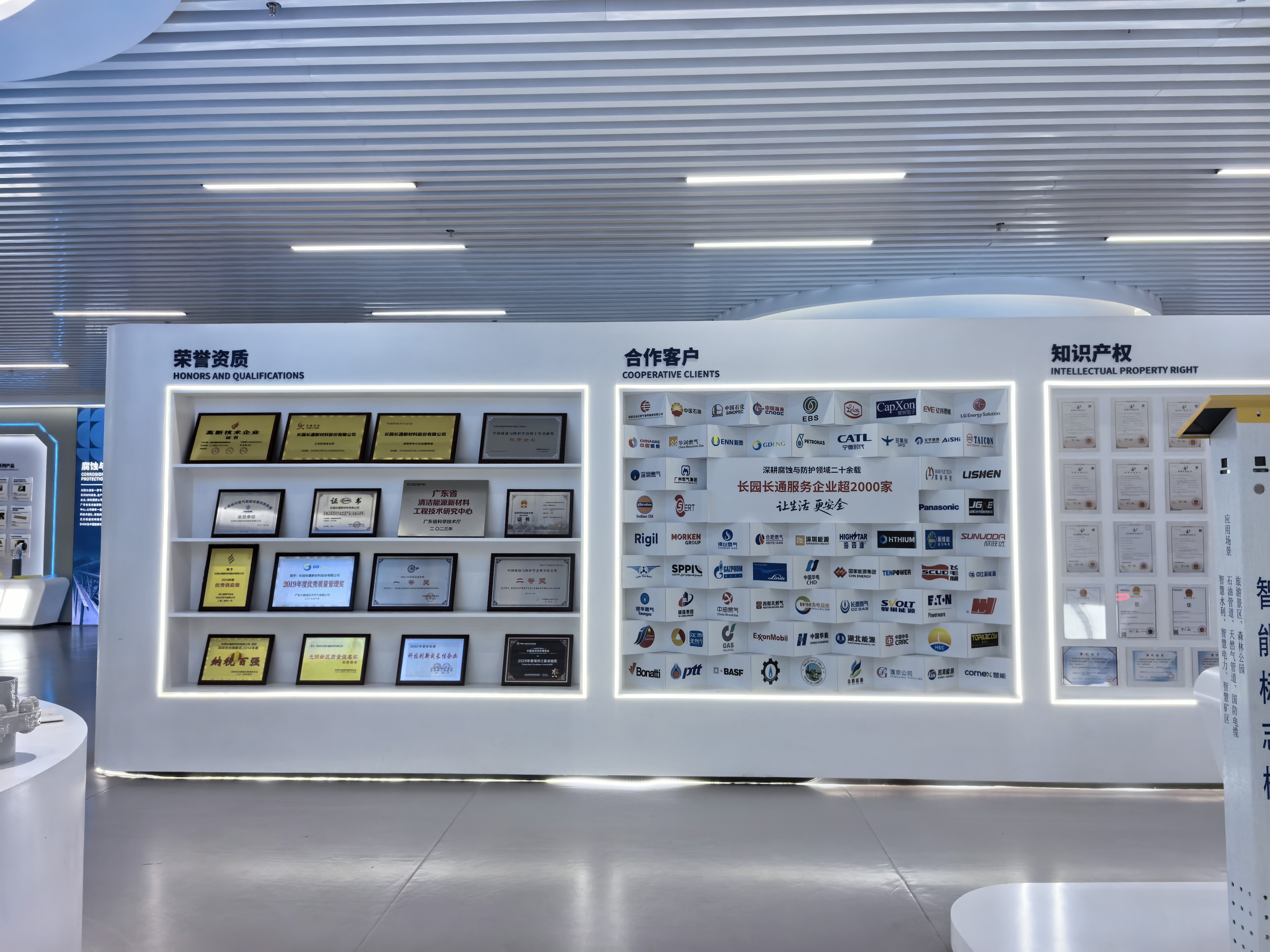
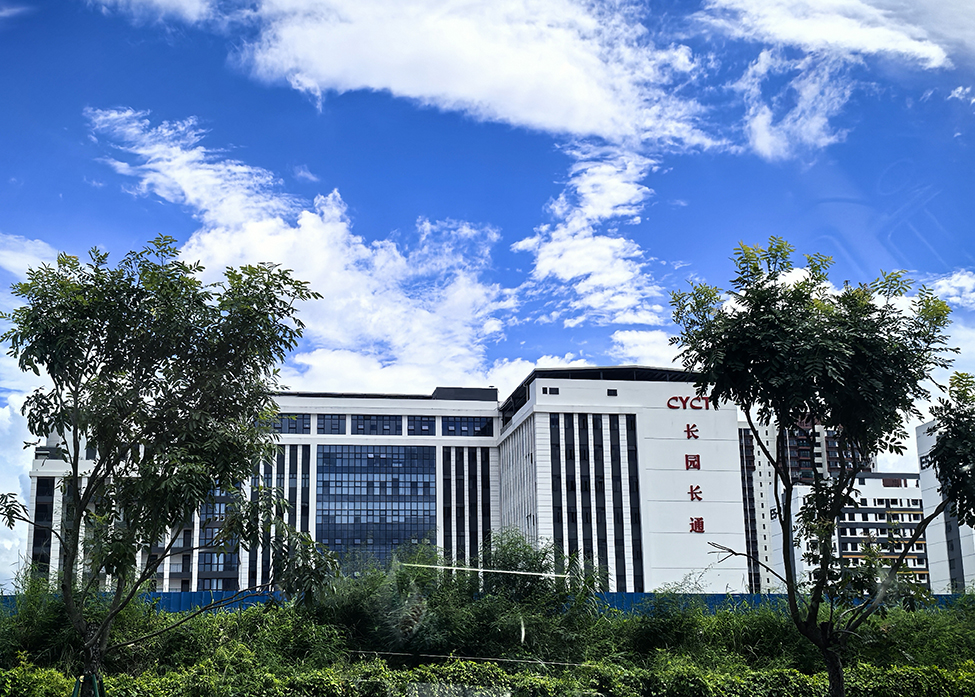
Founded in 2000, CYCT New Materials Company Limited has dedicated itself to the design, research, development, and high-volume manufacture of pipeline anti-corrosion materials. As a reliable strategic supplier for mega energy corporations including PetroChina, Sinopec, and PipeChina, we maintain a dominant domestic market share and support global transmission infrastructures.
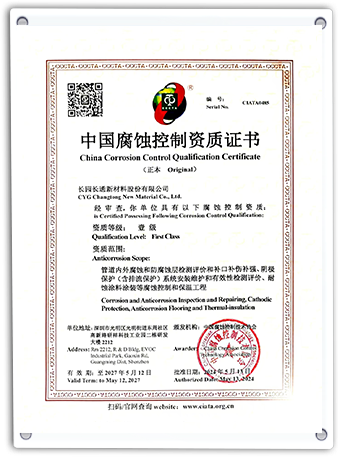
Our operational capabilities extend beyond raw material manufacturing. We provide comprehensive, life-cycle engineering support, specializing in buried pipeline safety detection, cathodic protection evaluation, field application layout planning, and integrated rehabilitation projects.
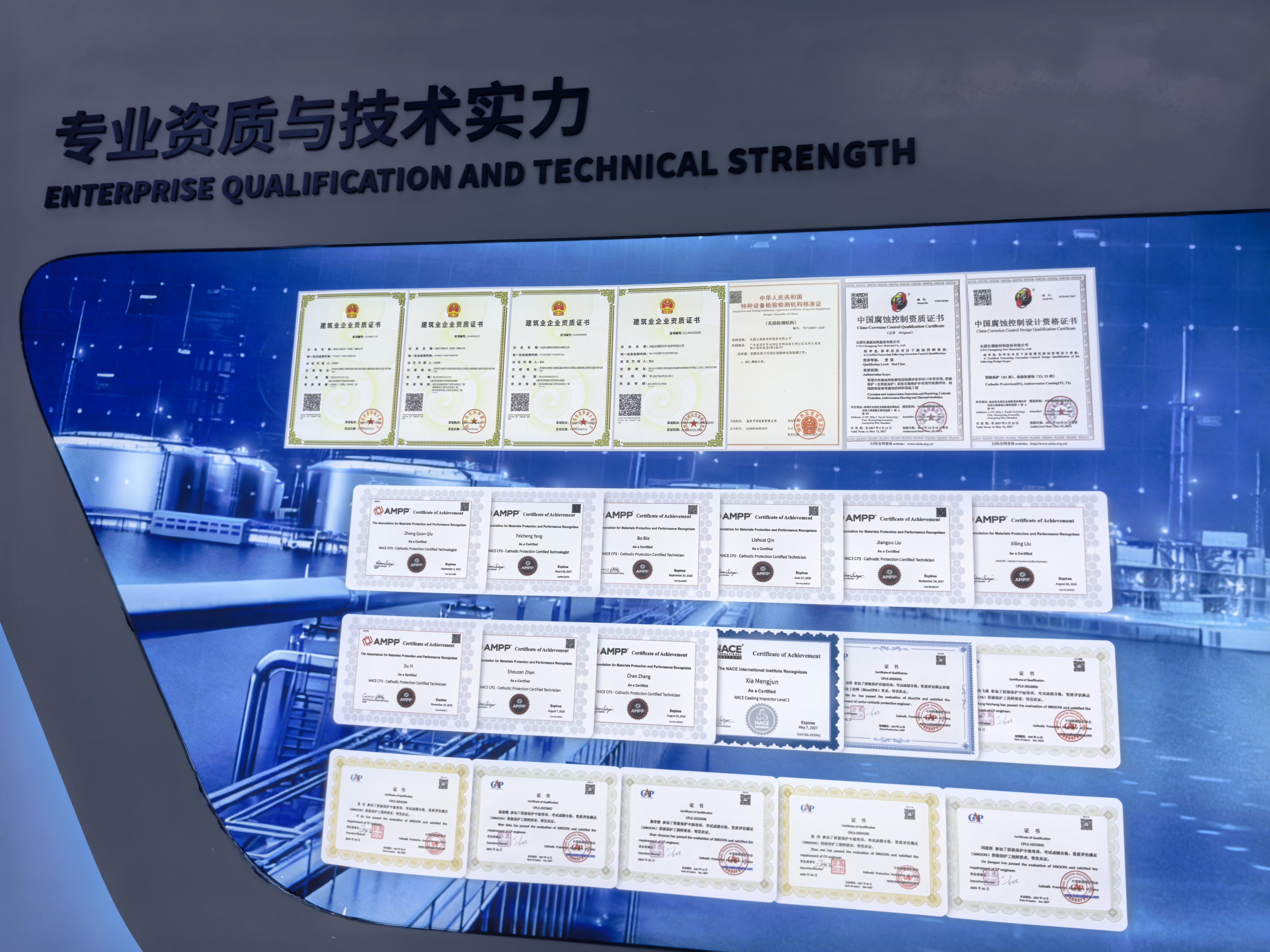
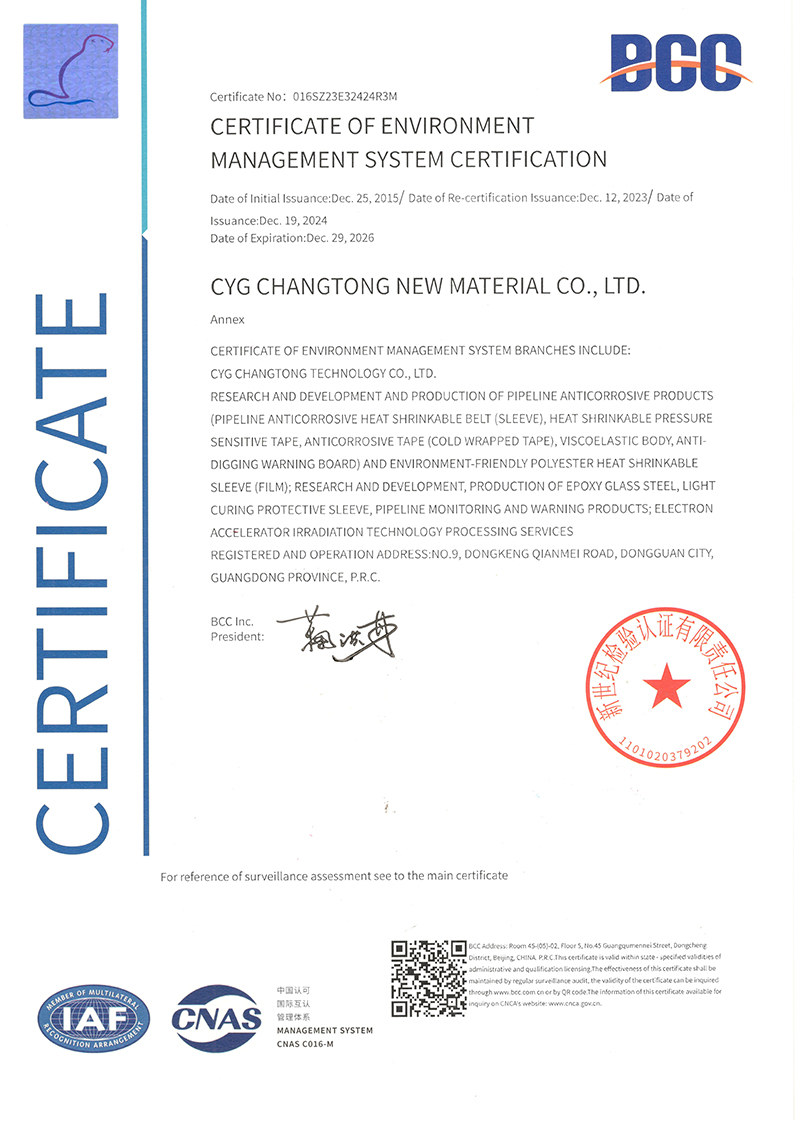
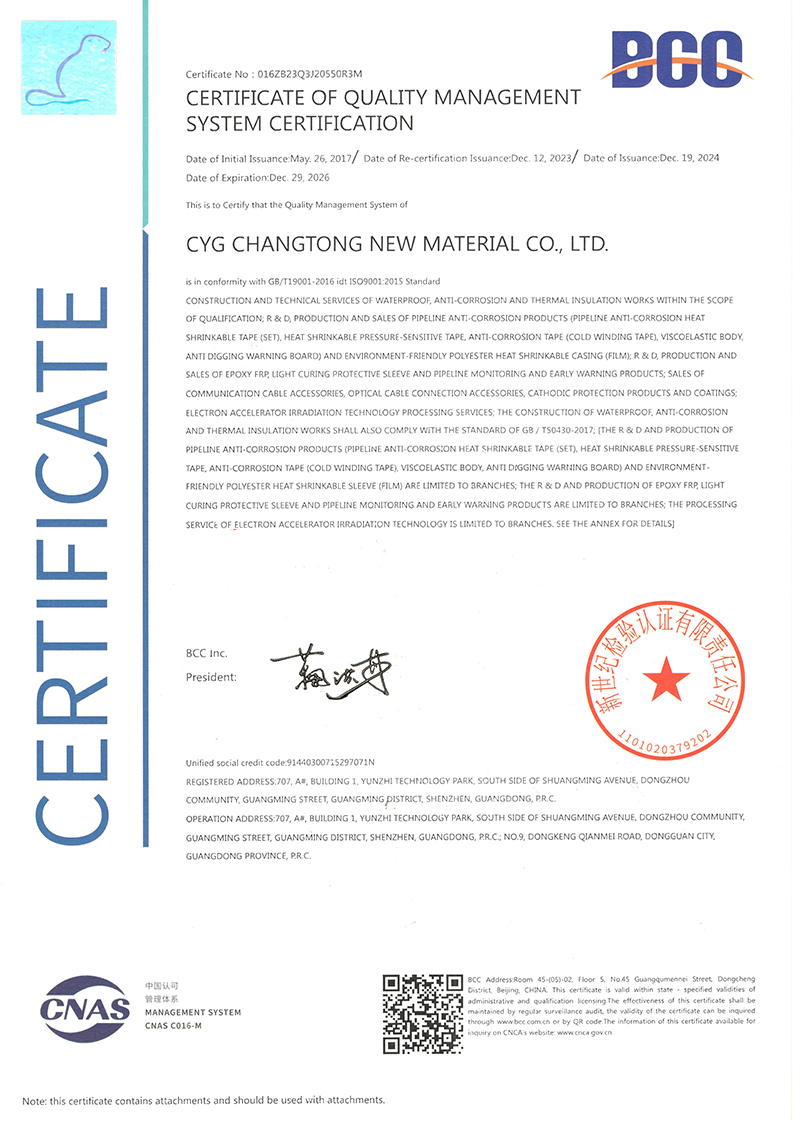
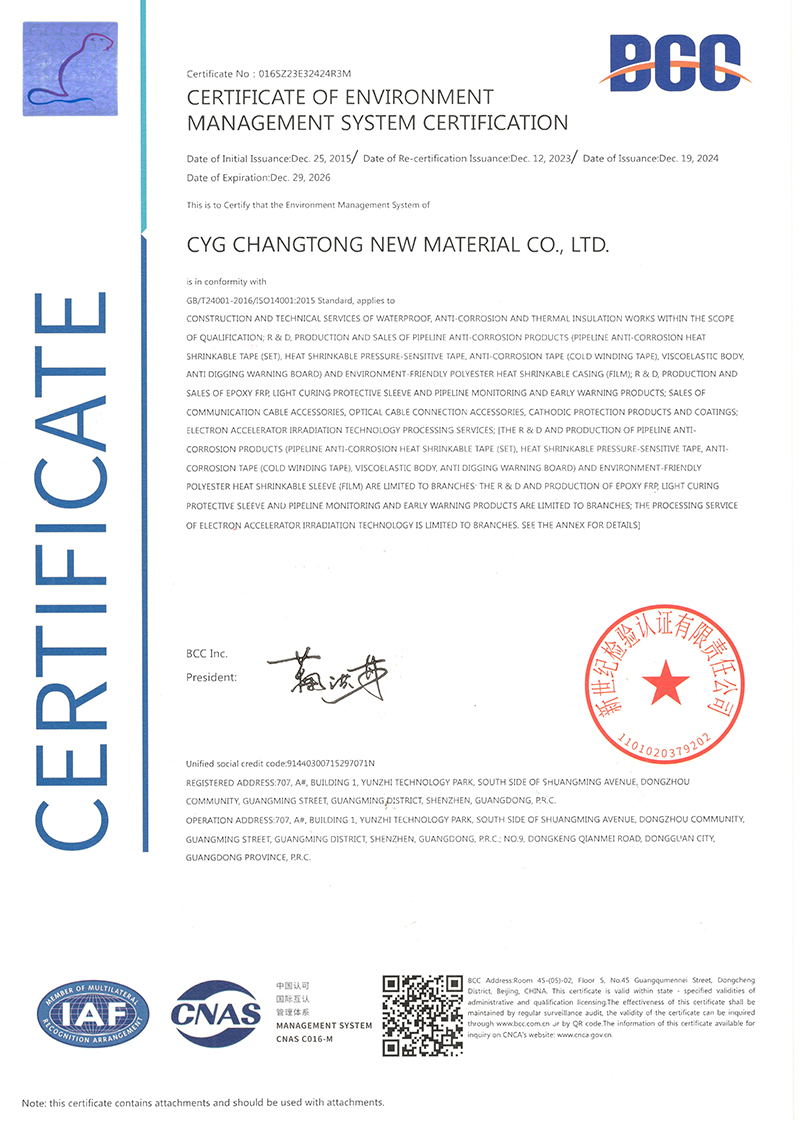
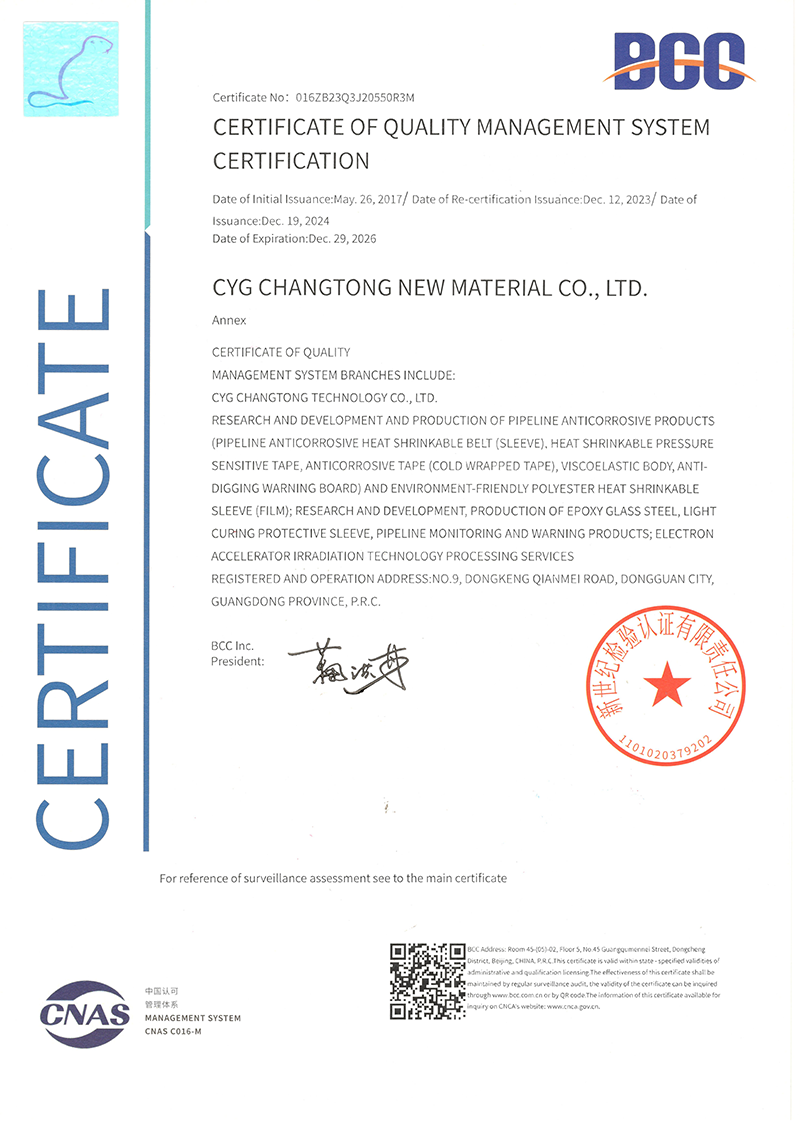
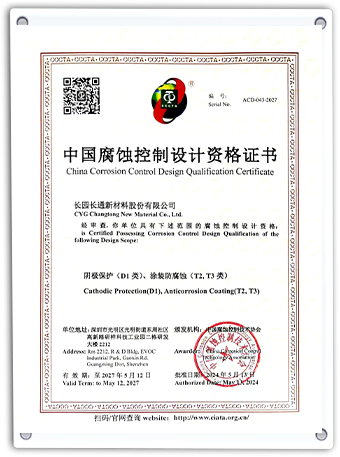
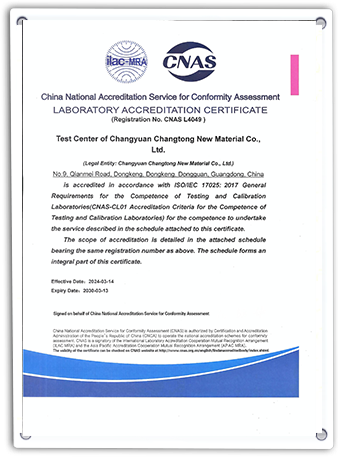
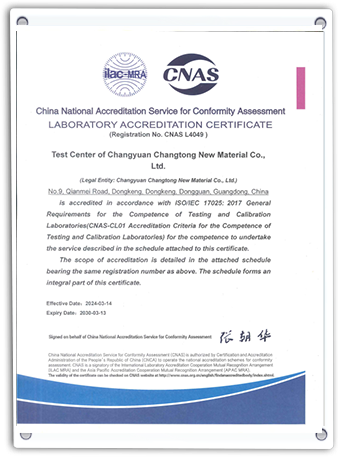
At the core of CYCT's technical leadership is our national CNAS-accredited laboratory. This accreditation validates that our testing processes, equipment calibration, and engineering standards meet the highest international criteria.
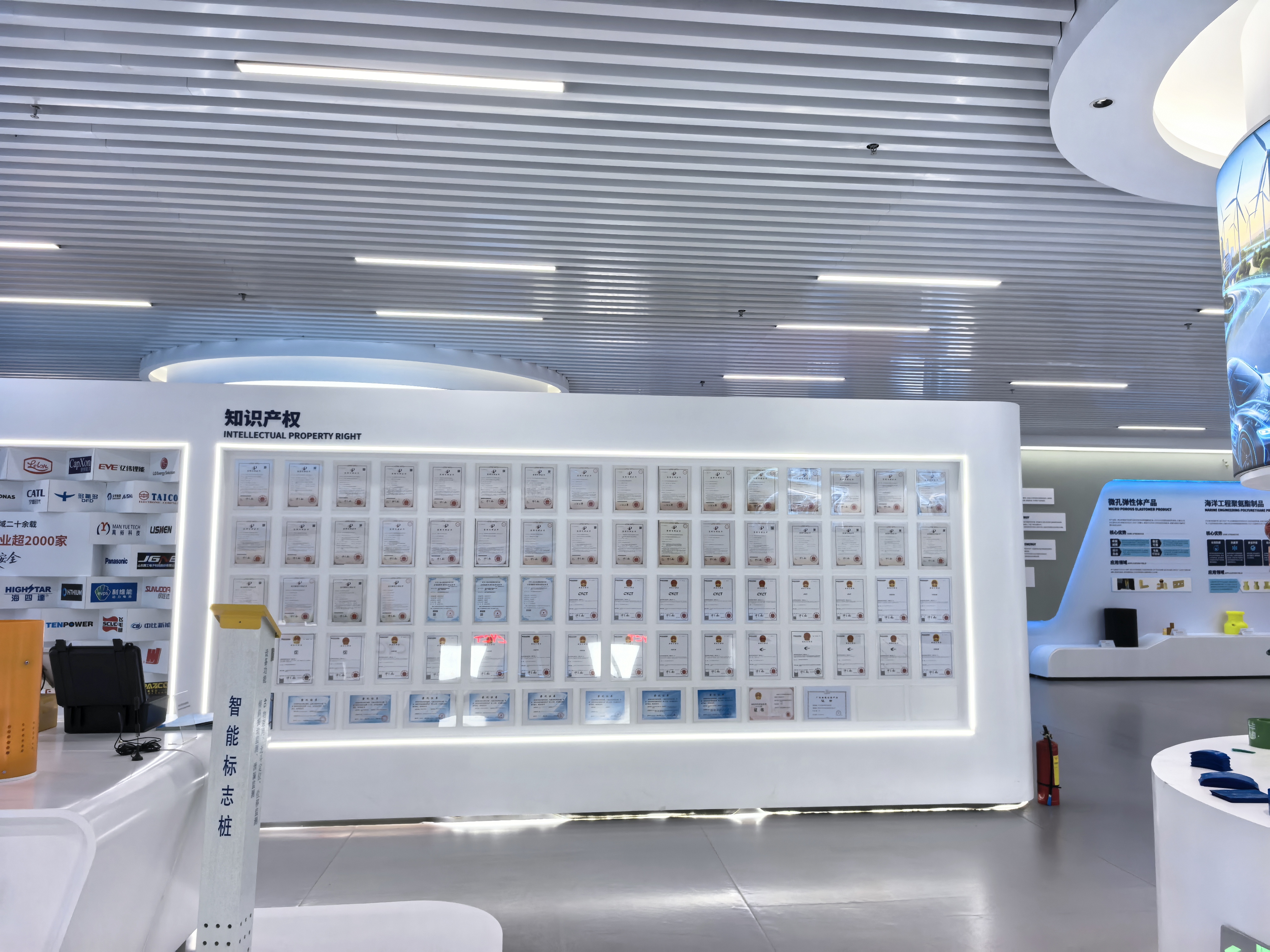
Collaborating with elite institutions such as the CNPC Pipeline Science Research Institute, we pioneer polymer cross-linking modifications, viscoelastic cold flow behavior, and GRP photo-curing protective sleeves. This research ensures our PP heat shrink sleeves exceed performance metrics in mechanical shear resistance, thermal aging, and cathodic disbondment.
Analyzing the material science and system compatibility of polypropylene coatings in high-temperature modern transmission infrastructure.
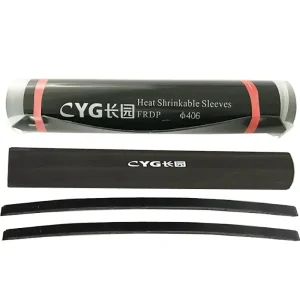
Modern high-temperature gas and oil trunk lines rely heavily on 3-Layer Polypropylene (3LPP) mill-applied coatings. CYCT's PP heat shrink sleeves are chemically and physically tailored to achieve an identical matrix structure at the Field Joint Coating (FJC) area, preventing mechanical or chemical mismatches.
Unlike conventional Polyethylene (PE) sleeves that deform or stress-crack at elevated temperatures, our PP sleeves maintain high shear resistance and dimensional stability at operating temperatures ranging up to 110°C (with peak resistance up to 120°C).
Heavy clay soils exert severe shear forces on pipelines during thermal expansion and contraction cycles. CYCT PP sleeves utilize radiation-crosslinked polypropylene backing coupled with high-shear hot-melt adhesives to resist soil shifting and avoid displacement.
To provide clear, objective criteria for engineering design, the table below highlights the performance improvements offered by CYCT's polypropylene heat shrink sleeves compared to standard polyethylene alternatives:
| Physical Property | Standard PE Sleeve (Class C60) | CYCT Premium PP Sleeve (Class C80/C110) | Test Standard |
|---|---|---|---|
| Max Continuous Temp | 60°C | 110°C / 120°C Peak | ISO 21809-3 |
| Tensile Strength | ≥ 15 MPa | ≥ 22 MPa | ASTM D638 |
| Peel Strength to Steel | ≥ 1.0 N/mm | ≥ 2.5 N/mm (at 23°C) | EN 12068 |
| Shear Resistance (80°C) | Fail / Softens | ≥ 0.2 MPa | ISO 21809-3 |
| Cathodic Disbondment | < 15 mm (at 60°C, 28d) | < 7 mm (at 100°C, 28d) | ASTM G42 |
Expanding infrastructure investments dictate absolute reliability. CYCT services the global grid, providing specialized protection across multiple industries.
The global transit of hydrocarbons requires transmission lines that cross diverse geographical regions, from extremely cold climates to hot deserts. Higher flow rates raise pipeline operating temperatures due to friction. CYCT PP sleeves prevent cathodic shielding and safeguard field joints from aggressive chloride attacks, moisture ingress, and microbiological corrosion.
Offshore pipelines encounter massive hydrostatic pressures and dynamic wave actions. In these harsh environments, our PP sleeves act as a crucial barrier system under concrete weight coatings. They prevent moisture migration, resist marine organism settlement, and withstand the extreme mechanical impacts of offshore pipe-laying vessels.
Urban underground district heating networks transport high-temperature steam and water. Thermal insulation requires robust protective systems to block groundwater penetration. CYCT PP heat shrink sleeves seal joint casings over pre-insulated piping networks, preventing thermal energy loss and moisture-induced external casing failures.
When pipelines cross major rivers, highways, or urban areas via HDD, the coating faces severe abrasion and gouging hazards from rock and soil. Traditional sleeves tear under these forces. CYCT offers fiberglass-reinforced PP and GRP photo-curing sleeves that supply the mechanical hardness needed to survive pulling operations without tearing.
Corrosion mitigation is heavily regulated. We design our products to align with top-tier international codes, ensuring seamless project approvals.
Our manufacturing processes are engineered to satisfy ISO 21809-3 (Type 1B, 1C, 2B) and EN 12068 (Class C) criteria. Every production run undergoes rigid testing to confirm quality consistency.
As a council member of the Chinese Society for Corrosion and Protection (CSCP) and an active participant in AMPP (formerly NACE), CYCT stays aligned with global anti-corrosion research.
CYCT is a registered supplier for PetroChina, Sinopec, China Gas Group, and Indian Oil. This vendor status highlights our compliance, volume capacity, and stable supply chain.
CYCT's technical division plans for tomorrow's infrastructure needs, focusing on eco-efficiency, smart features, and extreme temperature performance.
CYCT is researching the integration of sensing matrices within viscoelastic adhesives. These modified formulations will offer active chemical feedback, signaling shifts in localized cathodic currents or adhesive degradation. This tech aims to help operators detect coating issues before metal loss occurs.
Environmental regulations require a reduction in Volatile Organic Compounds (VOCs) during field installations. Our team is developing solvent-free, eco-friendly liquid epoxy primers that yield high adhesion to steel substrates without discharging toxic vapors, helping developers comply with green initiative standards.
Standard PP sleeves demand high preheating temperatures (often >180°C) during installation, which can risk backing degradation or incomplete adhesive flow if poorly executed. CYCT's upcoming low-preheat PP sleeve operates efficiently at lower preheat levels, reducing installation energy costs and improving field reliability.
By dispersing nano-scale organophilic clay particles into the hot-melt copolymer matrix, our researchers have increased the material's cohesive strength and gas barrier properties. This technology blocks corrosive gas molecules like CO2 and H2S from reaching the underlying steel surface.
Addressing essential technical and engineering queries regarding PP heat shrink sleeves, application techniques, and quality parameters.
From repair patches to hot melt fillers, discover our full catalog of pipeline integrity materials.
 CYCT
CYCT