Premium solutions specifically designed to exceed PEMEX pipeline specifications and adapt to Mexico's diverse geological environments.
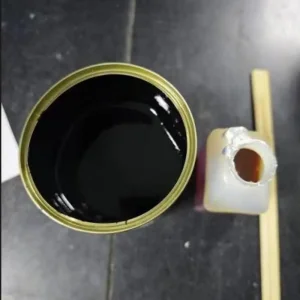
Mexico's energy and industrial infrastructure is undergoing a significant transformation. The national petroleum pipeline network, managed primarily by PEMEX (Petróleos Mexicanos), along with the rapidly expanding natural gas distribution networks operated by private concessionaires, spans thousands of kilometers across extremely diverse and challenging terrains. From the highly saline and corrosive coastal regions of Veracruz and Tabasco to the arid, rocky soil conditions of Northern Mexico, steel pipelines are subjected to severe electrochemical stress, mechanical shifting, and varying cathodic conditions.
In this context, traditional anti-corrosion systems such as coal tar enamel or field-applied liquid epoxies are increasingly presenting limitations. This has driven a major shift toward high-performance viscoelastic coatings. Viscoelastic systems offer self-healing properties that flow under stress, sealing micro-fissures and providing long-term barrier protection. In Mexico, factories and procurement managers are seeking advanced materials that can withstand local operating challenges: high soil stresses (clay soil swelling and shrinking), high service temperatures (especially downline of compressor stations), and simplified field installation that minimizes human error.
"Mexico's pipeline operators are prioritizing high-durability, cold-applied viscoelastic materials to mitigate the risk of cathodic disbondment and pipeline failures in critical environmental protection zones."
The current industrial environment in Mexico requires that pipeline protection coatings comply strictly with international and local standards, including NACE SP0169, ISO 21809-3, and PEMEX corporate standards (NRF-026-PEMEX). Viscoelastic coatings, characterized by their minimal surface preparation requirements (SSP-SP2/SP3 hand tool cleaning is often sufficient) and immediate backfill readiness, have become highly favored for field joint coating (FJC) repairs, valve station rehabilitation, and repair of existing 3LPE/3LPP coated steel pipelines.
A proven record of quality, innovation, and global compliance since 2000.
Globally, the pipeline corrosion mitigation industry is moving rapidly toward sustainable, high-efficiency, cold-applied technologies. Viscoelastic coating materials, formulated from non-crystalline low-molecular-weight polyolefins (predominantly Polyisobutene or PIB), remain in a semi-solid, highly viscous state throughout their lifetime. The viscoelastic behavior ensures that the coating material continually flows into any mechanical voids, surface roughness, and microscopic cracks, providing a 100% airtight and water-resistant barrier.
This represents a paradigm shift from traditional crystalline polymers, which can become brittle or experience stress cracking over time, allowing moisture to slip beneath the coating layer and initiate localized corrosion or stress corrosion cracking (SCC). Globally, engineering consultants in regions like the Middle East, the North Sea, and North America are specifying viscoelastic tapes for high-reliability areas (valves, flanges, structural tees, HDD transitions) due to their impressive resistance to cathodic disbondment and water vapor transmission.
The PIB matrix remains in a perpetual fluidic state, actively sealing micro-punctures and mechanical abrasions automatically.
Eliminates human mixing errors. Bonds directly to metal, PE, PP, FBE, and PVC with minimal surface preparation (St2/St3).
Engineered to operate reliably in continuous temperatures ranging from -30°C to extreme climates reaching up to 85°C.
For buyers and distributors in Mexico, sourcing viscoelastic coatings directly from CYCT (CYCT New Materials Company Limited) offers deep strategic benefits. As a state-level high-tech enterprise founded in 2000, CYCT has developed an integrated industrial supply chain that optimizes cost structure while upholding rigorous testing and quality control. Operating a national CNAS-accredited laboratory, CYCT can guarantee that every batch of viscoelastic tape, heat shrink sleeve, and UV-curing outerwrap meets the exact parameters defined in ISO 21809-3.
Our manufacturing facility in China integrates advanced extrusion, continuous blending, and coating lines, allowing us to produce viscoelastic compounds with high consistency. Unlike local distributors who rely on outsourced raw materials, CYCT develops proprietary polyolefin formulations that resist cold flow degradation under high soil shear stress. This translates directly to the Mexican market: we deliver premium performance coatings at competitive factory-direct pricing, even when including international freight logistics.
Furthermore, our manufacturing efficiency allows us to shorten production lead times significantly. In key infrastructure developments, delays in field joint coatings can halt the entire laying pipeline operation. CYCT's large-scale output capacity, backed by over two decades of pipeline service experience with PetroChina, Sinopec, and PipeChina, ensures that large-scale infrastructure projects in Mexico are supplied reliably, avoiding critical down-time.
Viscoelastic coatings are versatile materials that can be deployed across various sections of the oil, gas, water, and petrochemical infrastructure in Mexico. The primary applications include:
Select from our industry-grade heat shrinkable sleeves, viscoelastic tapes, and mechanical outer protection systems manufactured to ISO and AMPP standards.
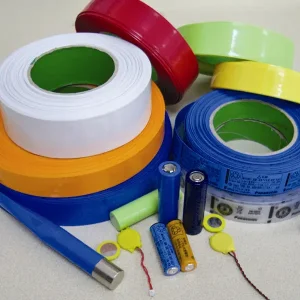
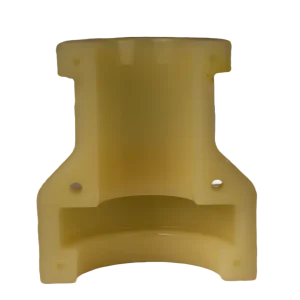
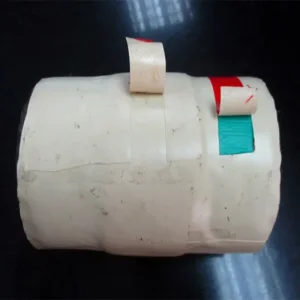
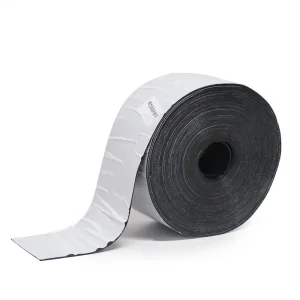
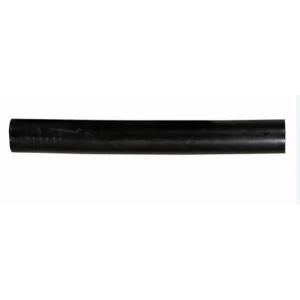
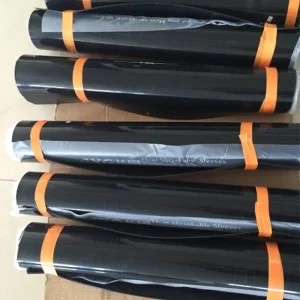
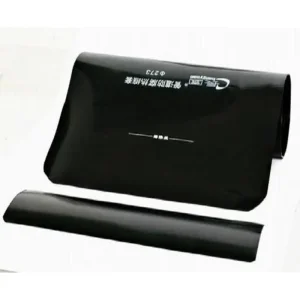
Managing international procurement in the energy sector demands high reliability and traceablity. Large-scale Mexican pipeline EPC contractors require suppliers who provide comprehensive certifications, technical documentation, and long-term warranties. CYCT helps minimize these procurement challenges by offering certified quality reporting. Every production run undergoes extensive in-house testing for cathodic disbondment, peel strength, lap shear strength, water vapor permeability, and thermal aging, before it leaves our facility.
As the industry evolves, pipeline engineers are turning to hybrid solutions that combine the chemical stability of viscoelastic compounds with the structural durability of composite glass-reinforced wraps or heavy-duty polyethylene outer tapes. This multi-layered approach ensures the pipeline remains protected against both environmental chemical attacks and the mechanical stresses of installation and soil movement.
A State-Level High-Tech Enterprise Dedicated to Advanced Pipeline Anti-Corrosion Technologies
CYCT New Materials Company Limited (for short, CYCT) is a state-level high-tech enterprise integrating R&D, production, and sales of pipeline corrosion protection materials, as well as buried pipeline detection services and pipeline coating field application services.
CYCT has dedicated decades of R&D to pipeline corrosion protection materials. Today, we are a trusted supplier of field joint coatings to energy entities like PetroChina, Sinopec, PipeChina, and various local gas utilities, holding a significant share of the market. Our product line has expanded to include specialized materials such as viscoelastic anti-corrosion tapes, photo-curing sleeves for HDD protection, and polyurea coatings.
Collaborating with research institutes like the CNPC Pipeline Science Research Institute, CYCT is equipped to provide comprehensive technical services, cathodic protection design, pipeline rehabilitation, and complete security solutions for global pipeline operations.
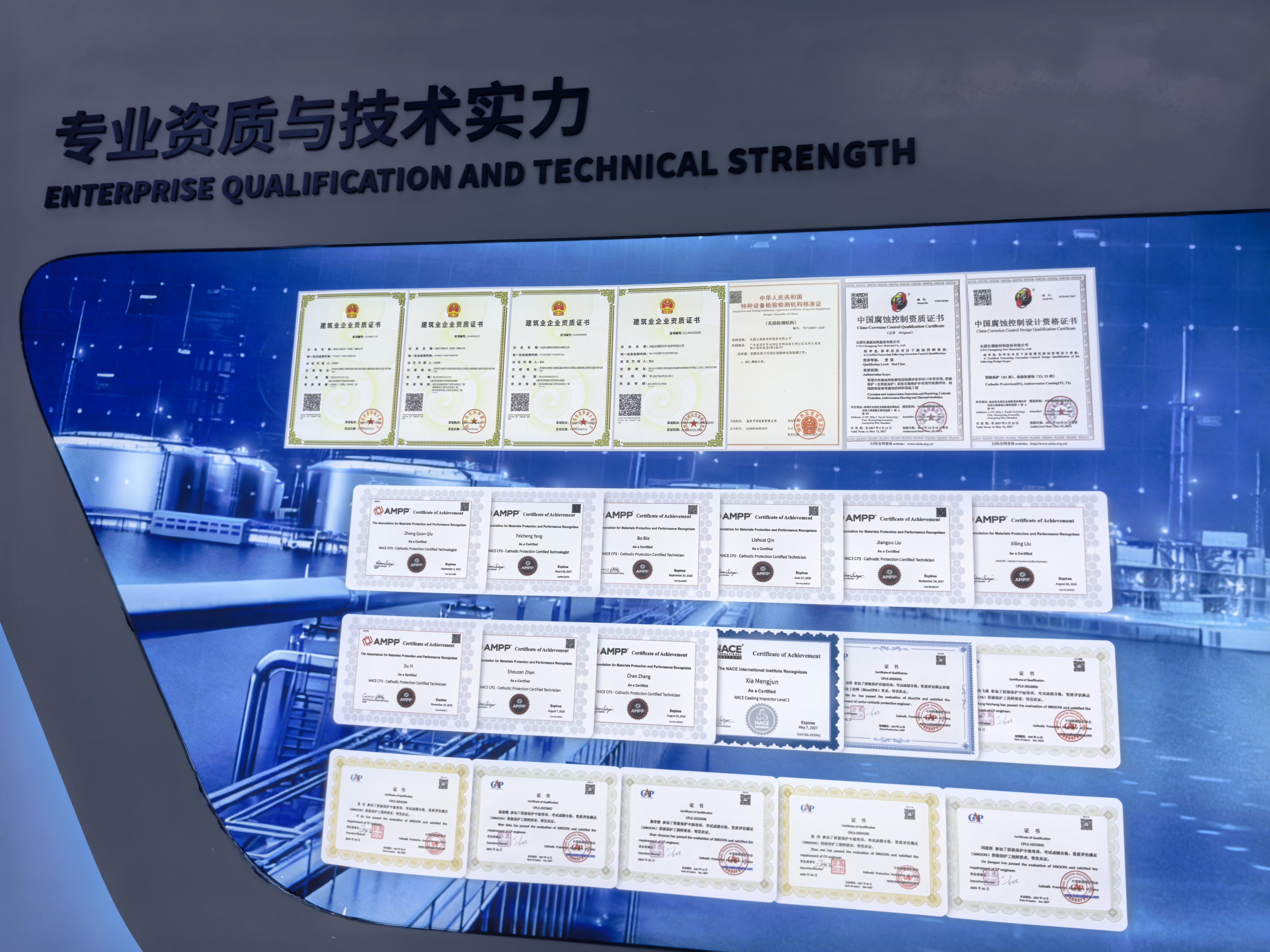
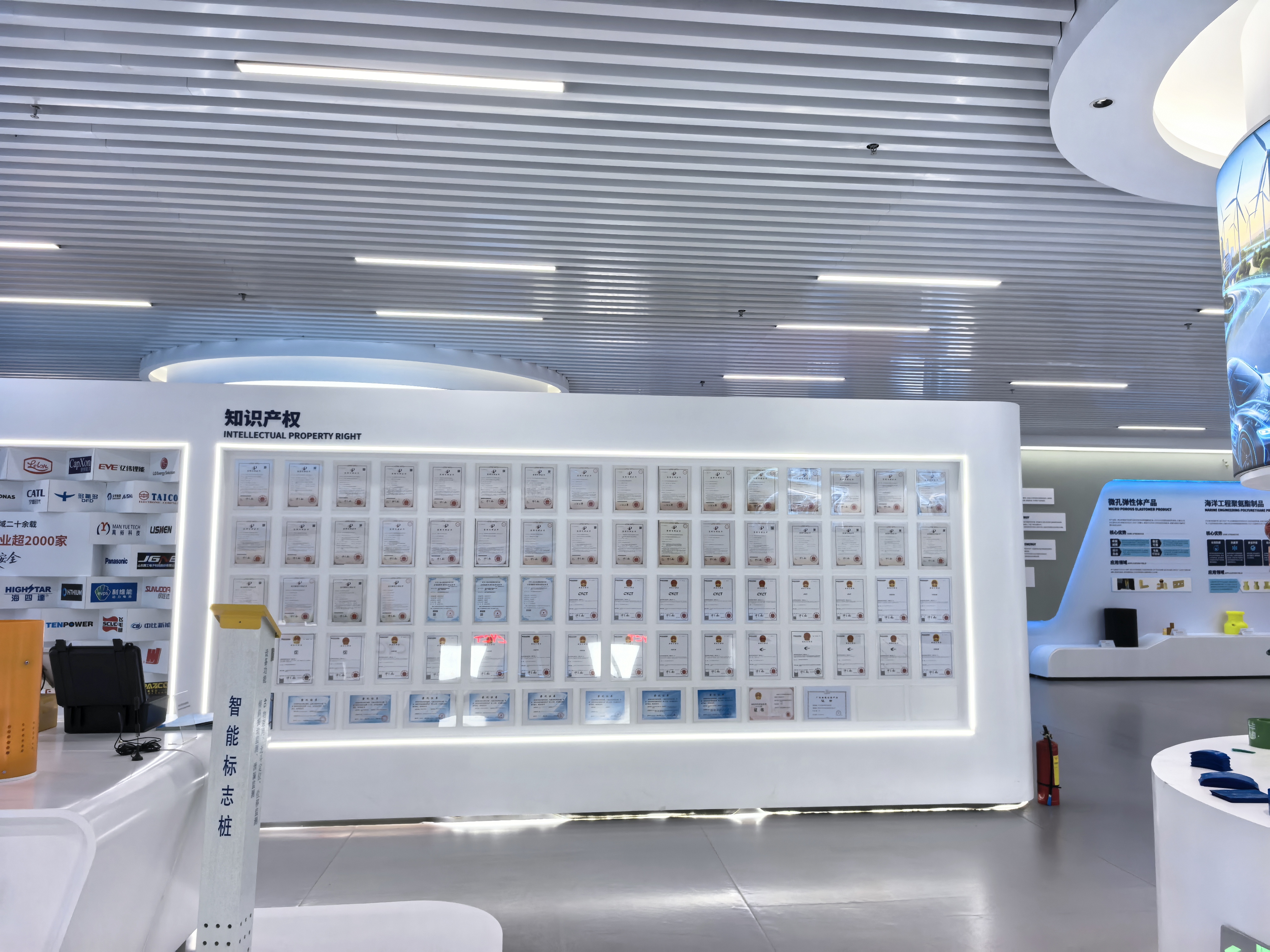
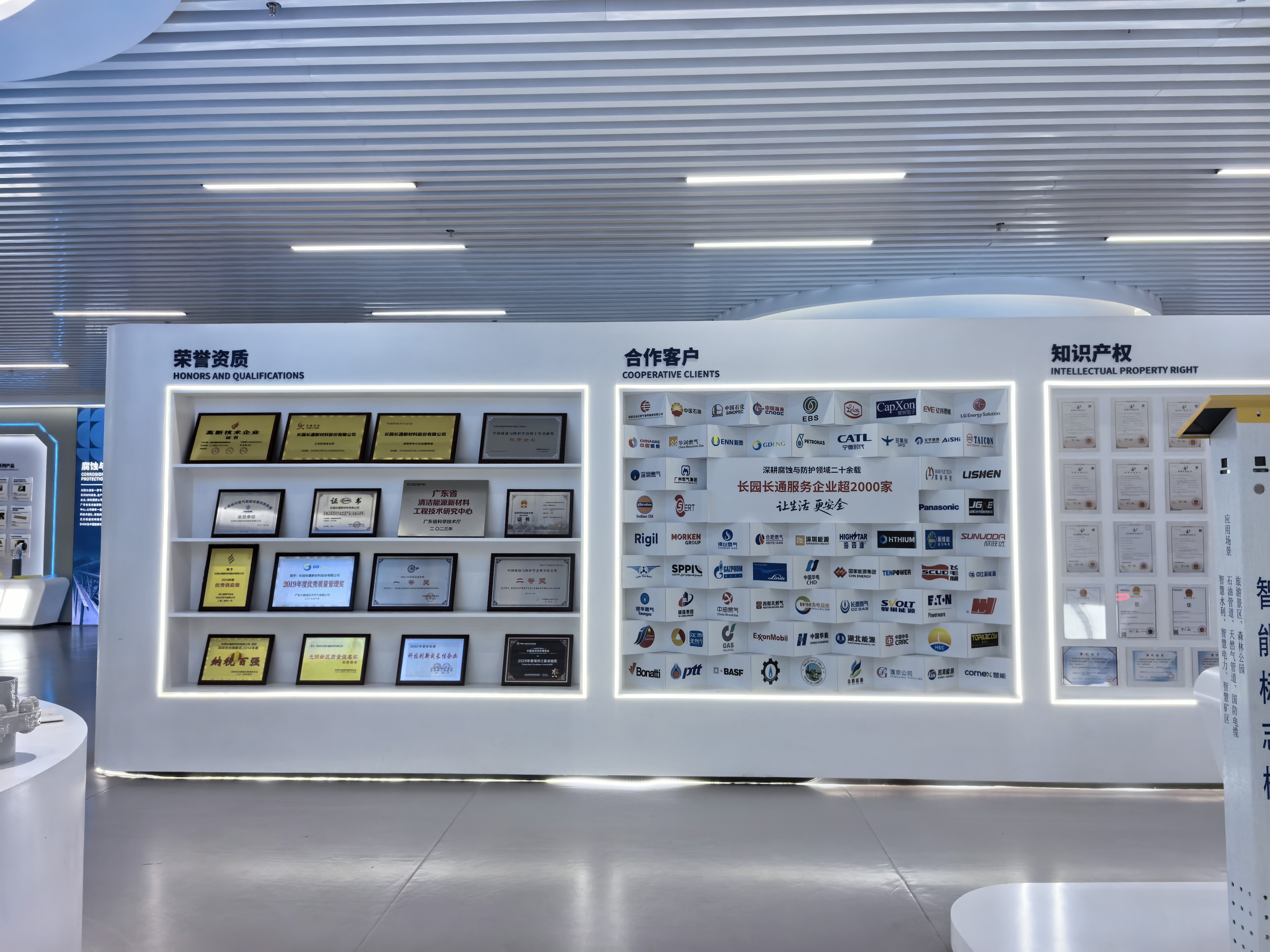
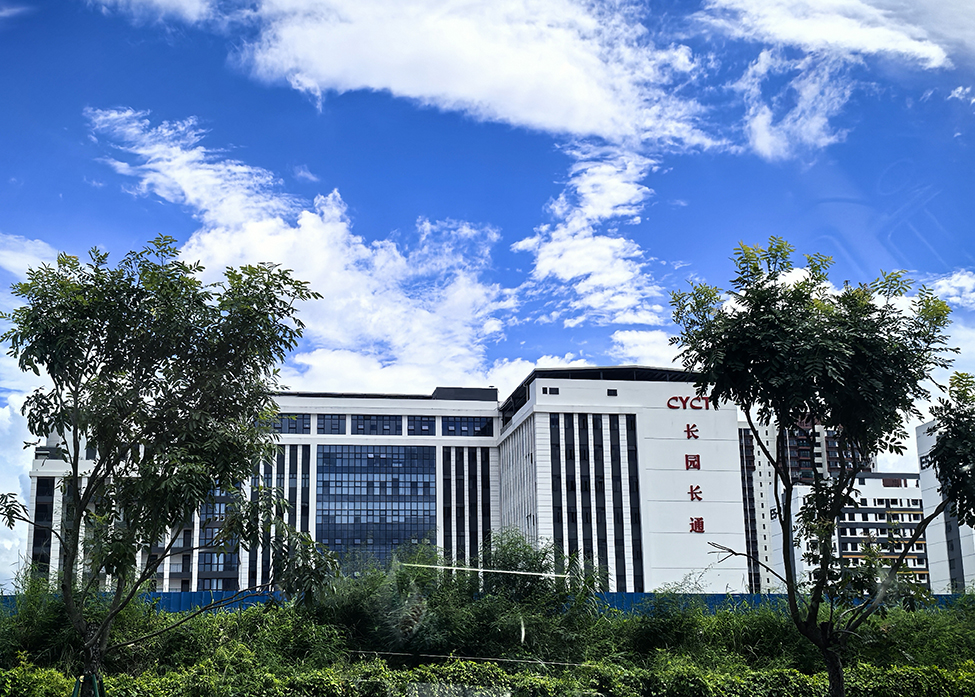
Our facility is equipped with a national CNAS-accredited laboratory and a dedicated team of engineers focused on adapting viscoelastic coatings to meet the diverse climate requirements of international projects, including the high-temperature and highly saline conditions found in the Gulf of Mexico.
Recognized member of the Chinese Society for Corrosion and Protection (CSCP) and certified supplier for major global energy developers.
Council Member of the Chinese Society for Corrosion and Protection (CSCP) | ISO 9001, ISO 14001, and ISO 45001 Certified Factory | Qualified Supplier to PetroChina, Sinopec, China Gas Group, and Indian Oil Corporation.
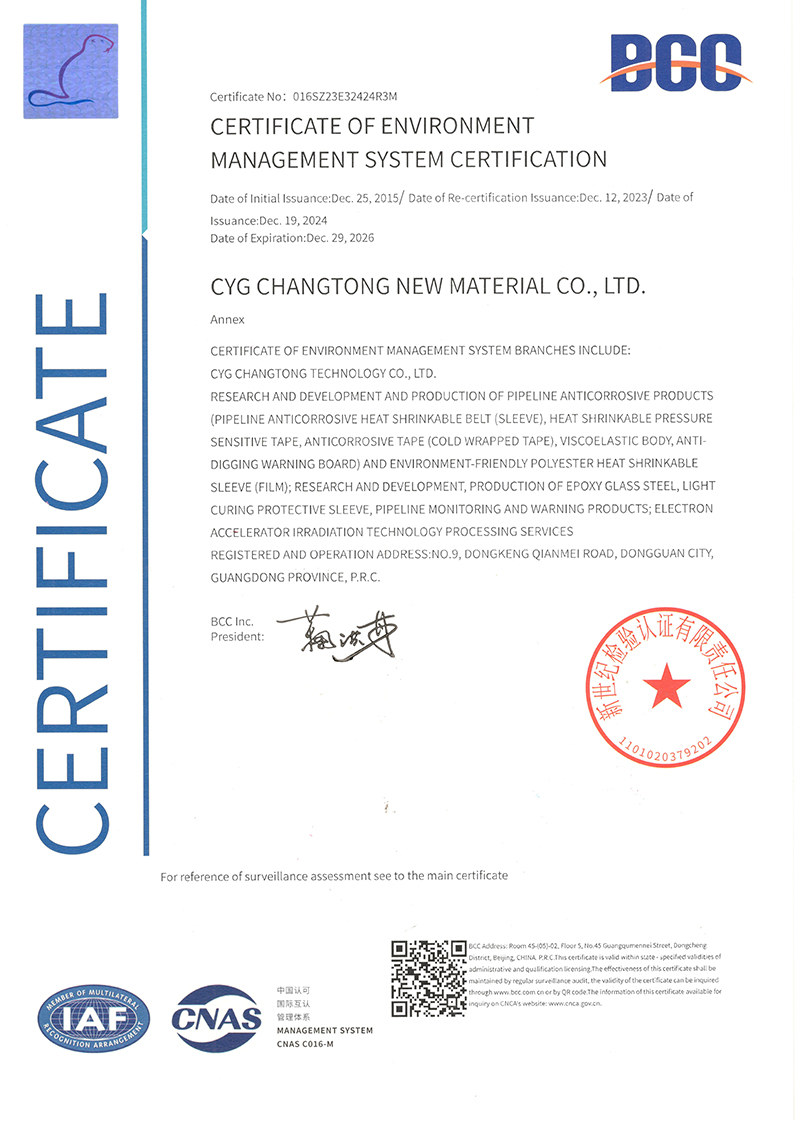
ISO 9001 QMS Compliance
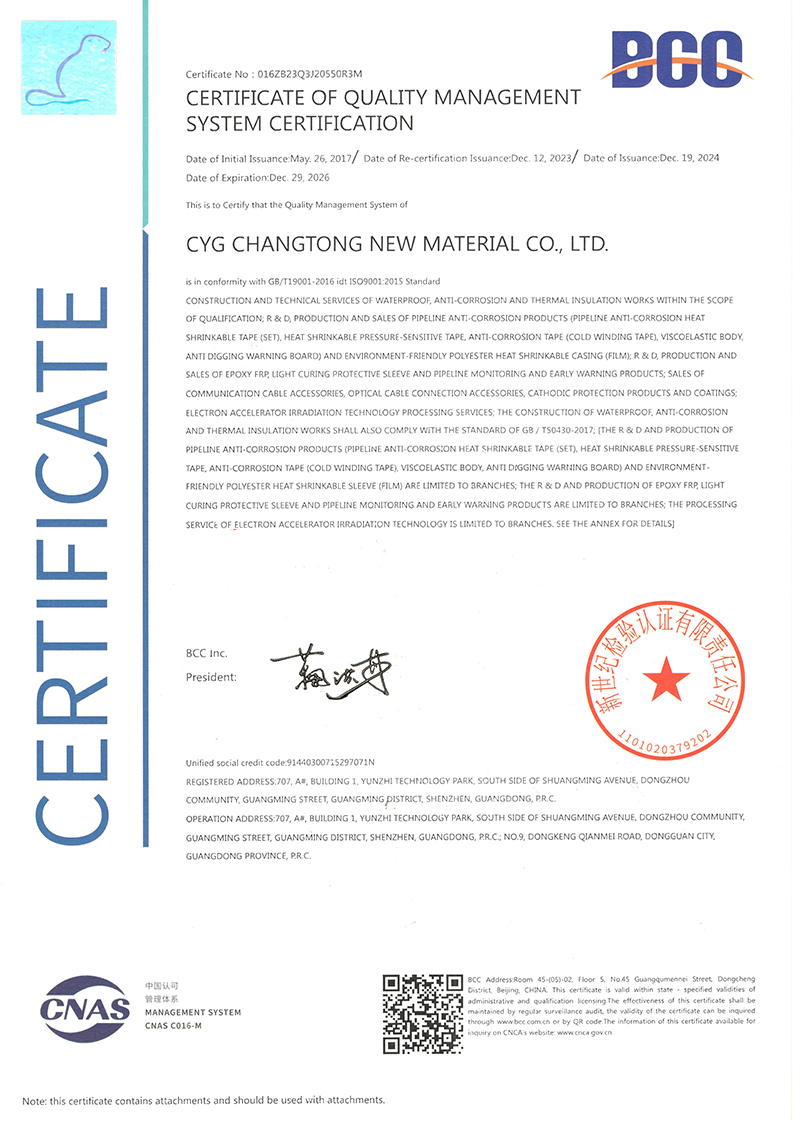
ISO 14001 EMS Standards
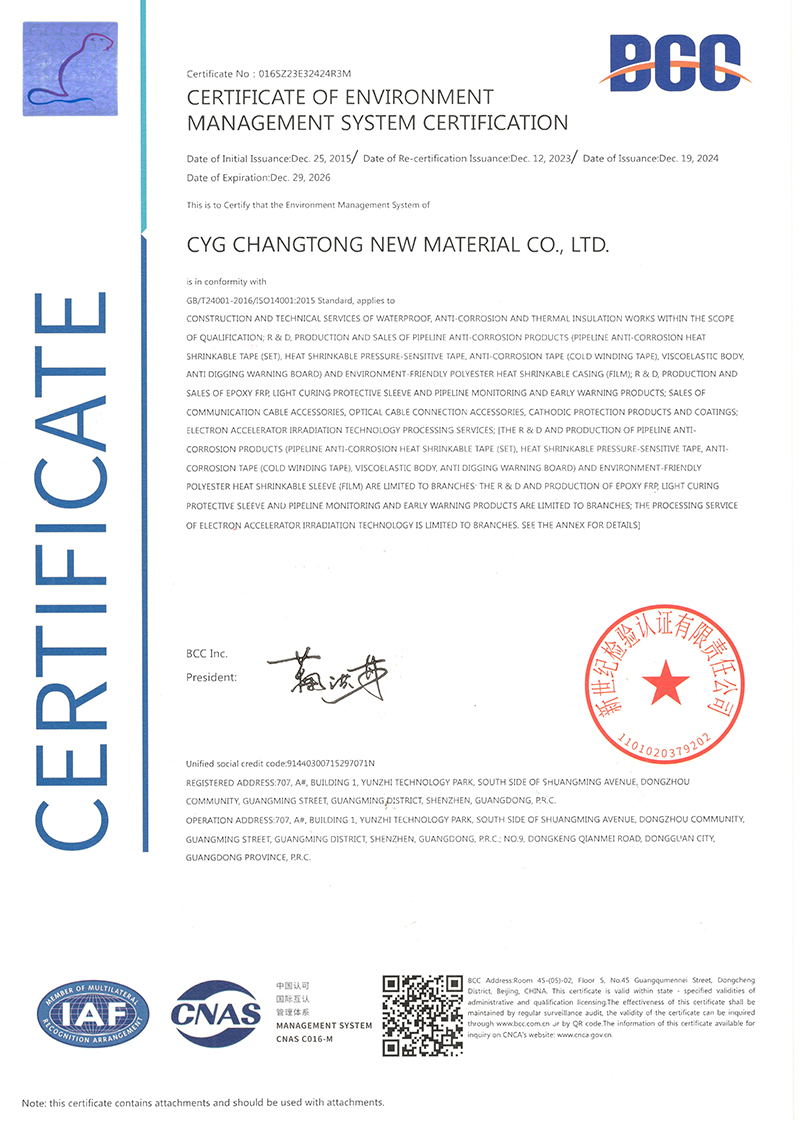
ISO 45001 Safety Management
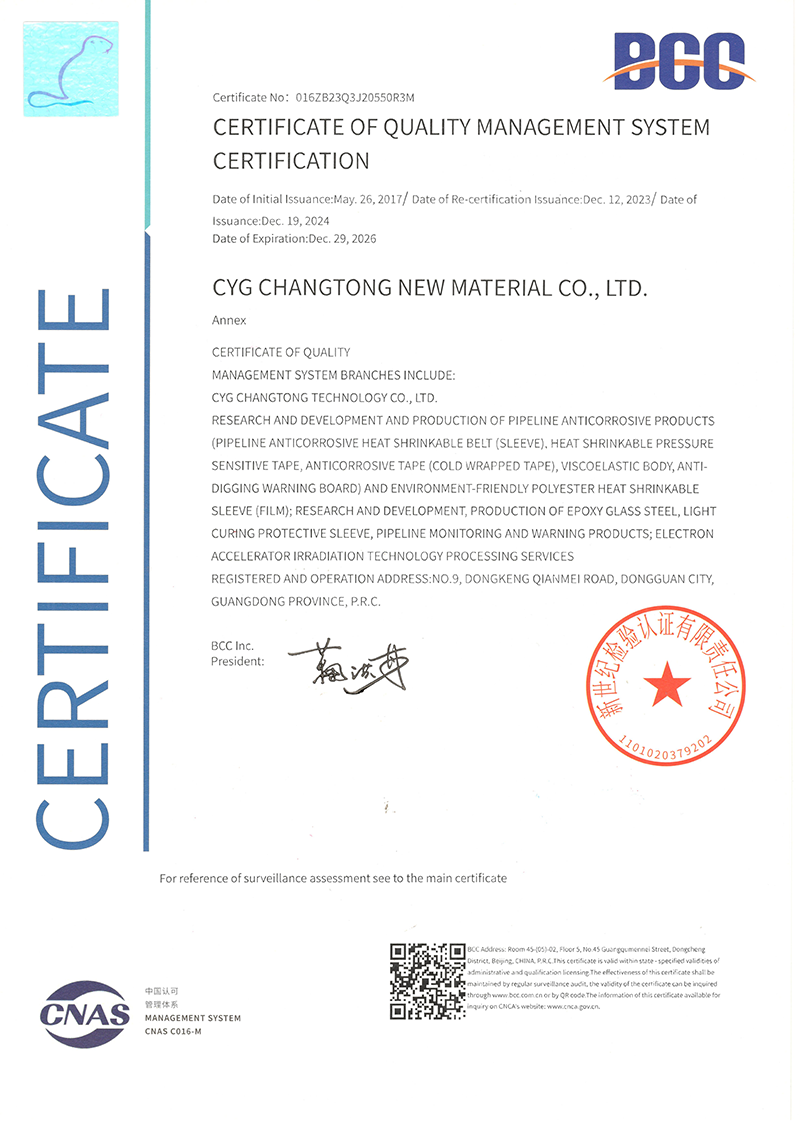
National Testing Qualification
Clear explanations regarding application, performance standards, and comparison with traditional pipeline coating systems.
 CYCT
CYCT