OEM China Suppliers Factory for GFRP Reinforcement and Repair Solutions for Pipeline Defects Manufacturers, Factories

,

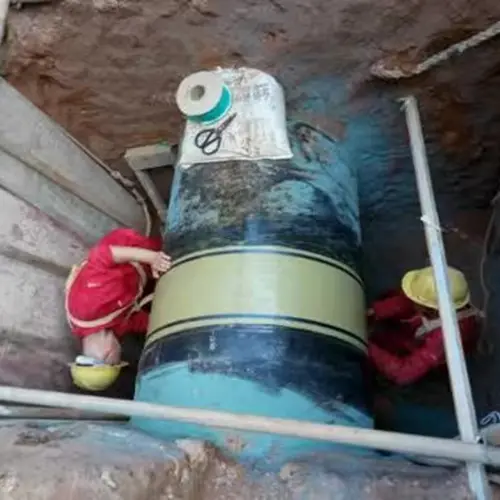
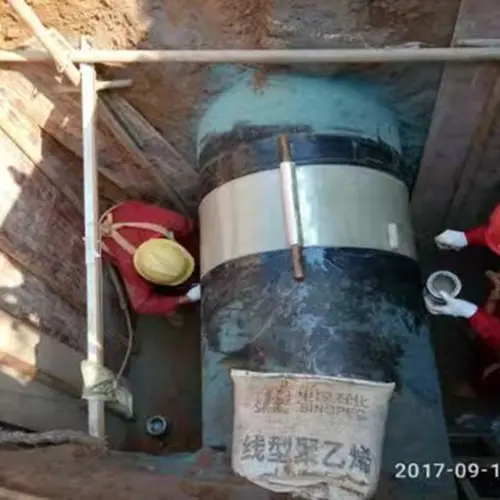
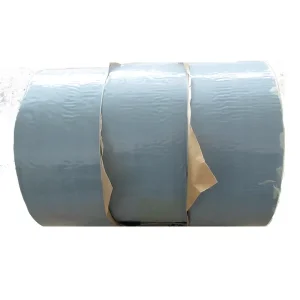
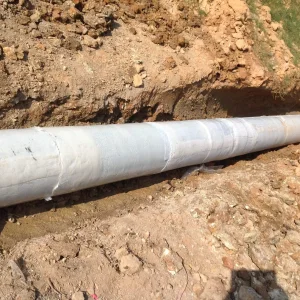
Introducing the CYG Changtong GRRP, a specialized solution for addressing various pipeline defects such as corrosion, mechanical damage, and weld imperfections. This innovative product is also suitable for enhancing the pressure capabilities of pipelines that are in perfect condition.

,

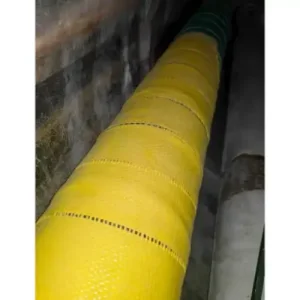
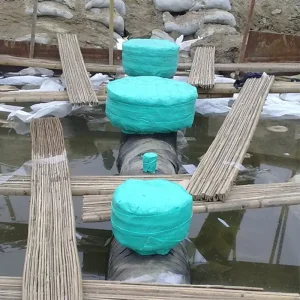
The wet wrap method employed in our product involves a meticulous process where the defective area is first filled with a high-quality filler material. Subsequently, high-strength fiber composites—comprised of durable fiber cloth and an effective adhesive—are manually applied around the pipeline. Once cured, this composite material demonstrates outstanding tensile strength and elastic modulus, effectively controlling any deformation at the defect site. As a result, it provides robust reinforcement and repair for pipeline defects, fully complying with the international standard ISO TS 2481For pipeline defect repair, the wet wrap method is highly recommended by experts and is an excellent choice from leading China suppliers and factories.

,
Product Description

Performance Parameters of Glass Fiber Cloth
Item Technical Index Test Method
Tensile Strength / MPa ≥2500 GB/T 3354
Elongation at Break / % ≥3.0 GB/T 3354
Tensile Elastic Modulus / MPa ≥7.0×10⁴ GB 50728
Interlaminar Shear Strength / MPa ≥35 GB 50728
Bending Strength / MPa ≥500 GB/T 3356
Performance Parameters of Filling Adhesive
Inspection Item Performance Requirement Test Method
Compressive Strength / MPa ≥60 GB/T 2567
Adhesion / MPa ≥8 GB/T 5210
Performance Parameters of Reinforcing Adhesive
Project Performance Requirements Data Requirement Test Method
Adhesive Performance Tensile Strength / MPa ≥30 GBT2567
Tensile Elastic Modulus / MPa ≥2.5×10³
Elongation / % ≥1.0
Flexural Strength / MPa ≥35 & no brittle (splinter-like) failure
Compressive Strength / MPa ≥60
Adhesion Standard Value of Steel–Steel Tensile Shear Strength / MPa ≥12 GB/T 7124
Steel–Steel Bonded Tensile Strength / MPa ≥25 GB/T 6329
Non-Volatile Matter Content, Solid Content % ≥99 GB/T 2793
Gel Time (25 °C) / h ≥12 GB/T 12007.7
GFRP Reinforcement and Repair Material Advantages
1 Composite materials have high specific strength and specific modulus.
2 Composite materials have strong designability.
3 Composite materials have a variety of molding processes, which facilitate reinforcement over large areas or for structures that are more complex.
4 The repair process does not require shutdown, has a short repair time, low cost, and requires simple equipment for on-site repair.
💡 Commonly used composite materials for pipeline defect repair include Glass Fiber Reinforced Plastic (GFRP), Carbon Fiber Reinforced Plastic (CFRP), and Aramid Fiber Reinforced Plastic (AFRP). Glass fiber is a good insulating material and will not undergo electrochemical corrosion with the pipeline, hence, glass fiber reinforcement technology has been widely applied in pipelines.
GFRP repair technology can be divided into two processes:
🔧 Wet Wrapping ✅ Full Cure
Frequently Asked Questions (FAQ)
Q What is the minimum tensile strength required for glass fiber cloth used in structural reinforcement?
The minimum tensile strength required for glass fiber cloth is ≥2500 MPa, as tested according to the GB/T 3354 standard. This high tensile strength ensures structural integrity and long-term performance in reinforcement applications.
Q What are the key performance requirements for filling adhesive in GFRP repair systems?
The filling adhesive must meet a minimum compressive strength of ≥60 MPa (per GB/T 2567) and a minimum adhesion of ≥8 MPa (per GB/T 5210). These properties ensure effective bonding and load transfer between the repair composite and the substrate.
Q Why is glass fiber preferred over carbon fiber or aramid fiber for pipeline repair?
Glass fiber is an excellent electrical insulator, which means it will not cause electrochemical (galvanic) corrosion when in contact with metallic pipelines. This makes GFRP a safer and more compatible choice for pipeline reinforcement compared to conductive carbon fiber in many applications.
Q What are the two main GFRP repair processes for pipelines?
GFRP repair technology can be divided into two primary processes: wet wrapping and full cure. Wet wrapping involves applying resin-impregnated fiber directly to the surface, while the full cure process allows the composite to reach complete polymerization for maximum mechanical performance.
Q What is the gel time requirement for the reinforcing adhesive and why does it matter?
The reinforcing adhesive must have a gel time of ≥12 hours at 25°C, as tested per GB/T 12007.7. A sufficient gel time ensures that the adhesive remains workable during application and allows adequate time for proper wetting and consolidation of the composite layers before curing begins.
Q What advantages does GFRP repair offer compared to traditional repair methods?
GFRP repair offers several key advantages: it provides high specific strength and modulus, strong design flexibility, and can be applied to complex or large-area structures without shutting down operations. The repair process is fast, cost-effective, and requires only simple on-site equipment, significantly reducing downtime and overall maintenance costs.

Related Products