OEM China GFRP Reinforcement and Repair Solutions for Pipeline Defects from Trusted Suppliers and Factory Manufacturers, Supplier

,

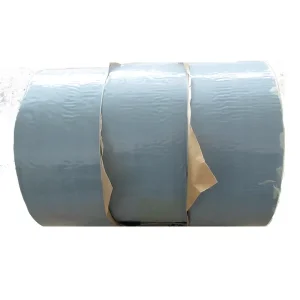
Introducing CYG Changtong GRRP, a premium solution designed specifically for addressing pipe defects such as corrosion, mechanical damage, and weld imperfections. Our innovative product is ideal for pressure enhancement in pipelines that are free from defects as well.

,

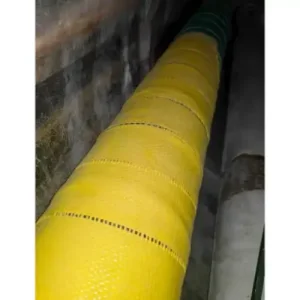
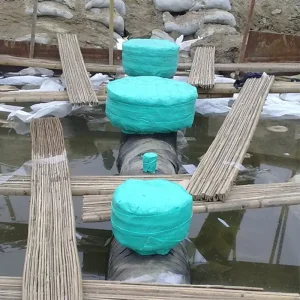
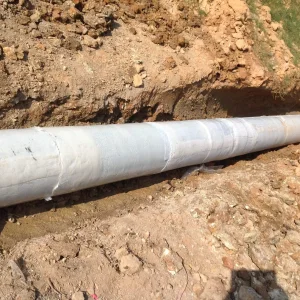
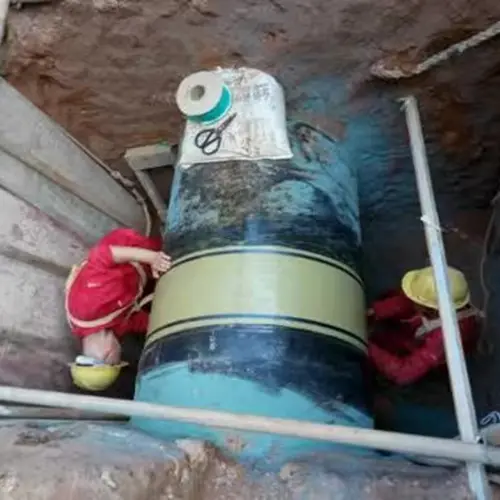
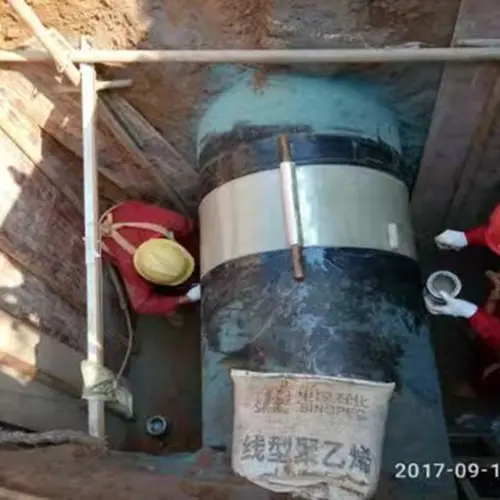
The wet wrap method is an advanced repair technique where the defective area is first filled with a high-quality filler material. Subsequently, our high-strength fiber composites, made of premium fiber cloth and adhesive, are meticulously wet-wrapped around the pipeline. Once cured, this composite material demonstrates exceptional tensile strength and elastic modulus, effectively controlling deformation at the defect site. This results in robust reinforcement and repair of pipeline defects, meeting the stringent requirements of the international standard ISO TS 2481As a trusted supplier in China, we highly recommend the wet wrap method for pipeline defect repairs, ensuring durable and reliable solutions for our clients.

,

Product Description

Performance Parameters of Glass Fiber Cloth

Item Technical Index Test Method
Tensile Strength / MPa ≥2500 GB/T 3354
Elongation at Break / % ≥3.0 GB/T 3354
Tensile Elastic Modulus / MPa ≥7.0×10⁴ GB 50728
Interlaminar Shear Strength / MPa ≥35 GB 50728
Bending Strength / MPa ≥500 GB/T 3356

Performance Parameters of Filling Adhesive

Inspection Item Performance Requirement Test Method
Compressive Strength / MPa ≥60 GB/T 2567
Adhesion / MPa ≥8 GB/T 5210

Performance Parameters of Reinforcing Adhesive

Project Performance Requirements Data Requirement Test Method
Adhesive performance Tensile Strength / MPa ≥30 GBT2567
Tensile Elastic Modulus / MPa ≥2.5×10³
Elongation / % ≥1.0
Flexural Strength / MPa ≥35 And no brittle (splinter - like) failure
Compressive Strength / MPa ≥60
Adhesion Standard Value of Steel - Steel Tensile Shear Strength / MPa ≥12 GB/T 7124
Steel - Steel Bonded Tensile Strength / MPa ≥25 GB/T 6329
Non - Volatile Matter Content, Solid Content % ≥99 GB/T 2793
Gel Time (25 °C) / h ≥12 GB/T 12007.7

GFRP Reinforcement and Repair Material Advantages

  • Composite materials have high specific strength and specific modulus;
  • Composite materials have strong designability;
  • Composite materials have a variety of molding processes, which facilitate reinforcement over large areas or for structures that are more complex;
  • The repair process does not require shutdown, has a short repair time, low cost, and requires simple equipment for on-site repair.

Commonly used composite materials for pipeline defect repair include Glass Fiber Reinforced Plastic (GFRP), Carbon Fiber Reinforced Plastic (CFRP), and Aramid Fiber Reinforced Plastic (AFRP). Glass fiber is a good insulating material and will not undergo electrochemical corrosion with the pipeline, hence, glass fiber reinforcement technology has been widely applied in pipelines.

GFRP repair technology can be divided into two processes: wet wrapping and full cure.
Frequently Asked Questions

What is GFRP and how is it used in pipeline repair?
GFRP (Glass Fiber Reinforced Plastic) is a composite material used for pipeline reinforcement and repair. It offers high strength, corrosion resistance, and can be applied without shutting down operations. GFRP is particularly effective because glass fiber is an excellent insulator and does not cause electrochemical corrosion with pipelines.
What are the main advantages of using composite materials for pipeline repair?
Composite materials offer several key advantages: high specific strength and modulus, strong designability, versatile molding processes for complex structures, no shutdown required during repair, short repair time, low cost, and simple on-site equipment requirements.
What is the minimum tensile strength requirement for glass fiber cloth?
According to the technical specifications, glass fiber cloth must have a minimum tensile strength of ≥2500 MPa, tested according to GB/T 3354 standards.
What are the two main GFRP repair processes?
GFRP repair technology can be divided into two main processes: wet wrapping and full cure. Both methods are effective for pipeline reinforcement and defect repair.
What is the required compressive strength for filling adhesive?
The filling adhesive must have a compressive strength of ≥60 MPa, tested according to GB/T 2567 standards, to ensure proper structural integrity in repair applications.
How does GFRP compare to other composite materials like CFRP and AFRP?
While CFRP (Carbon Fiber Reinforced Plastic) and AFRP (Aramid Fiber Reinforced Plastic) are also used for pipeline repair, GFRP has the distinct advantage of being an excellent insulator that will not undergo electrochemical corrosion with pipelines, making it widely applied in pipeline reinforcement applications.

Related Products