Premium pipeline reinforcement materials specifically optimized for Riyadh municipal and industrial water networks.
The Riyadh metropolitan region is currently witnessing an unprecedented infrastructure expansion driven by Saudi Arabia’s Vision 2030. From the massive underground utilities supporting the Riyadh Metro project and the King Salman Park development to the crucial water distribution networks operated by the National Water Company (NWC) and the Saline Water Conversion Corporation (SWCC), pipeline networks are the lifeblood of this expanding megacity.
However, the geological and environmental profile of the Riyadh Central Province presents severe degradation challenges to steel and composite pipeline installations. The soils are characterized by high salinity, variable moisture tables due to treated sewage effluent irrigation, and extreme thermal fluctuations—with ground temperatures shifting between mid-winter lows and scorching summer highs that can heat exposed steel to over 70°C.
"High concentrations of chlorides and sulfates in the local soil profile accelerate electrochemical corrosion on unprotected steel. Combined with significant soil stress from high thermal contraction and expansion cycles, traditional protective coatings risk cracking, disbondment, and subsequent pipeline failure."
To address these conditions, modern pipeline engineering in Riyadh demands robust, multi-layered corrosion protection systems and physical reinforcement. Field joint coatings (FJC), mechanical protective outerwraps, and viscoelastic self-healing systems have transitionally become the baseline specification for both municipal potable water lines and the regional oil and gas transmission corridors operated by Saudi Aramco and SABIC.
A proven track record of durability, quality control, and large-scale industrial supply capacity.
For engineers and site asset owners in the Riyadh region, securing the structural integrity of pipeline systems requires a calculated selection of modern protection technologies. The primary industry strategy pivots on shielding the pipeline substrate from electrolyte (water and salt oxygen) contact and mitigating the mechanical forces of soil settlement, traffic loading, and thermal expansion.
The primary factory-applied coating for water and hydrocarbon transmission pipelines in the Middle East is either 3LPE or 3LPP. However, during shipping, handling, and field operations, these coatings are susceptible to physical damage. Local specifications mandate the use of high-adhesion materials to restore the coating barrier:
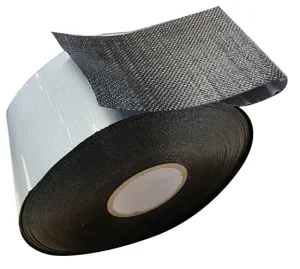
One of the most significant advancements in pipeline corrosion mitigation is viscoelastic chemistry. Designed to flow cold, viscoelastic tapes conform to irregular geometries (such as tees, elbows, and flanges) and exhibit unique self-healing properties when minor mechanical damage occurs.
Operating within a broad temperature envelope, viscoelastic systems do not cure, meaning they maintain perpetual elasticity and adhesion. This prevents cathodic disbondment and water ingress under shielding, a common failure point of traditional tape coatings in saline desert environments.
Urbanization in Riyadh requires trenchless technology, such as Horizontal Directional Drilling (HDD), to lay utility pipelines beneath busy motorways, railway tracks, and existing buildings. Traditional coatings are highly vulnerable to abrasion and gouging when pulled through rocky desert soils.
UV-Curing GRP (Glass Reinforced Plastic) Sleeves offer mechanical protection. Applied over the field joint coating and cured within minutes using natural sunlight or UV equipment, these sleeves form an impact-resistant, hard outer shield that protects the underlying anti-corrosion barrier from physical damage during the pipe-pulling phase.
High mechanical protection matching severe soil stress classes for deep-buried pipelines.
Specially formulated backings and hot melts designed to operate up to 80°C (176°F).
Formulated to resist cathodic disbondment and prevent corrosion underneath the coating.
Securing supply chain resilience is a primary driver for major pipeline installations in the Middle East. CYCT operates a state-of-the-art manufacturing infrastructure in China that integrates automation, stringent quality control, and robust high-capacity output.
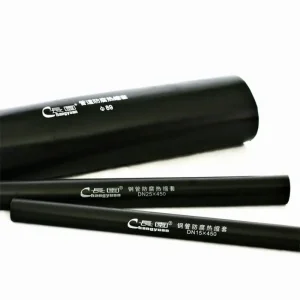
As a state-level high-tech enterprise, CYCT employs automated co-extrusion lines, precision adhesive coating systems, and real-time thickness monitoring. Our production lines output specialized heat-shrinkable materials, viscoelastic tapes, and composite sleeves, ensuring chemical consistency across all production batches.
For regional buyers in Riyadh and the wider GCC region, our factory infrastructure provides a reliable manufacturing capacity that mitigates project delays. From customized width profiles to special temperature-grade formulations, CYCT is equipped to engineer materials that align with complex project guidelines.
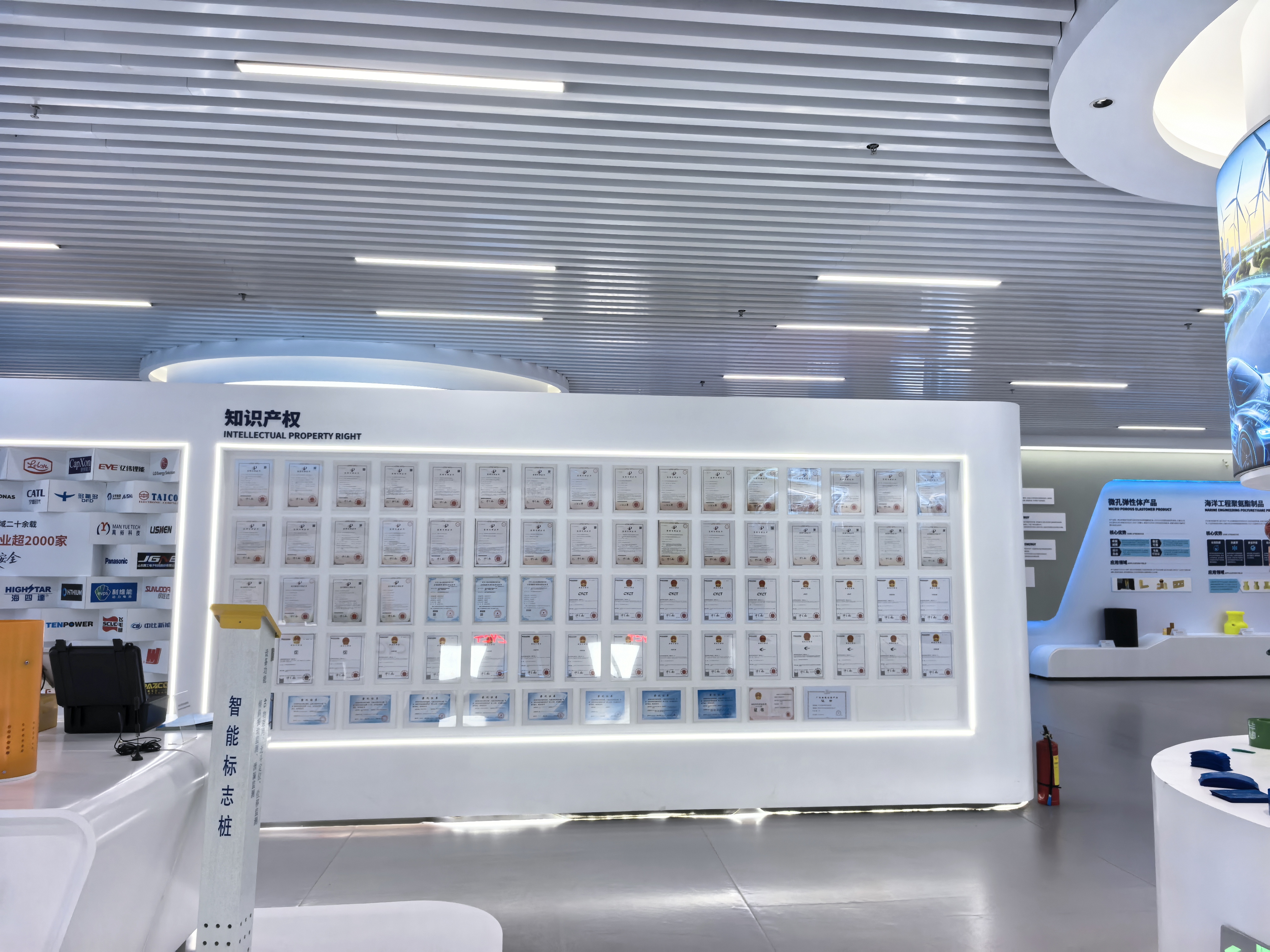
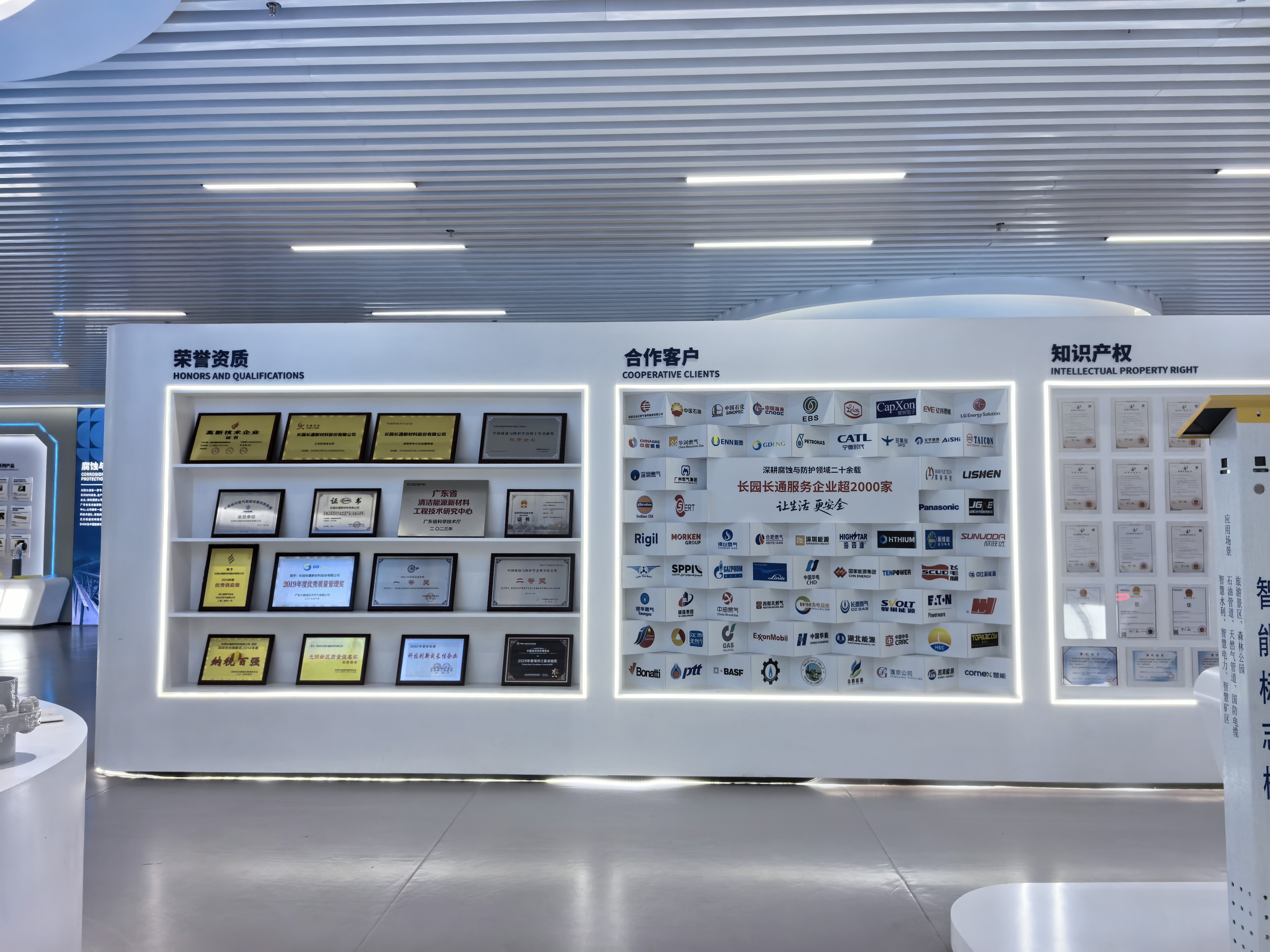
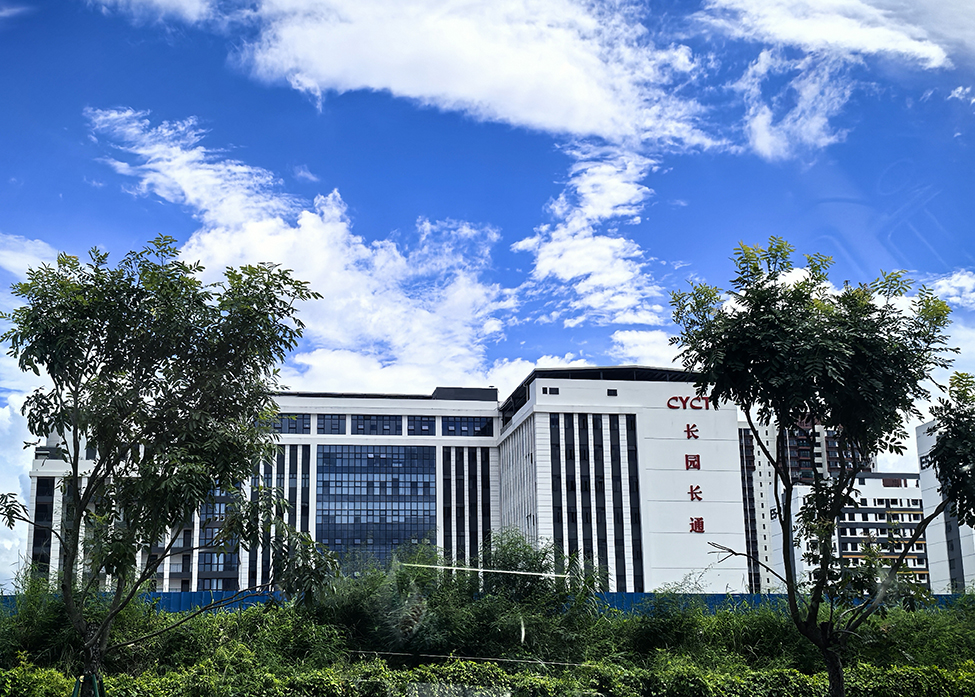
CYCT New Materials Company Limited (for short, CYCT) is a state-level high-tech enterprise integrating R&D, production and sales of pipeline corrosion protection materials as well as buried pipeline detection service and pipeline coating field application service into one. CYCT devotes itself to the R&D, production and sales of pipeline corrosion protection materials for decades.
CYCT owns leading testing and R&D capabilities, a professional R&D team, and a national CNAS-accredited laboratory. By partnering with leading research institutes such as the CNPC Pipeline Science Research Institute, CYCT is capable of providing in-service pipelines with varied technical services, including buried pipeline detection, design schemes, cathodic protection, rehabilitation projects, and integrated solutions for safety protection.
CYCT has been a stable supplier of field joint coatings for years to PetroChina, Sinopec, PipeChina, and local pipeline operators, securing a prominent market share. Furthermore, CYCT has successfully developed and introduced specialized corrosion protection materials, such as viscoelastic anti-corrosion systems, photo-curing sleeves for HDD protection, and polyurea coatings.
In international markets, including Saudi Arabia and the broader GCC region, CYCT’s engineered products serve as a reliable choice for EPC contractors and municipal utility authorities looking to secure critical pipeline infrastructure.
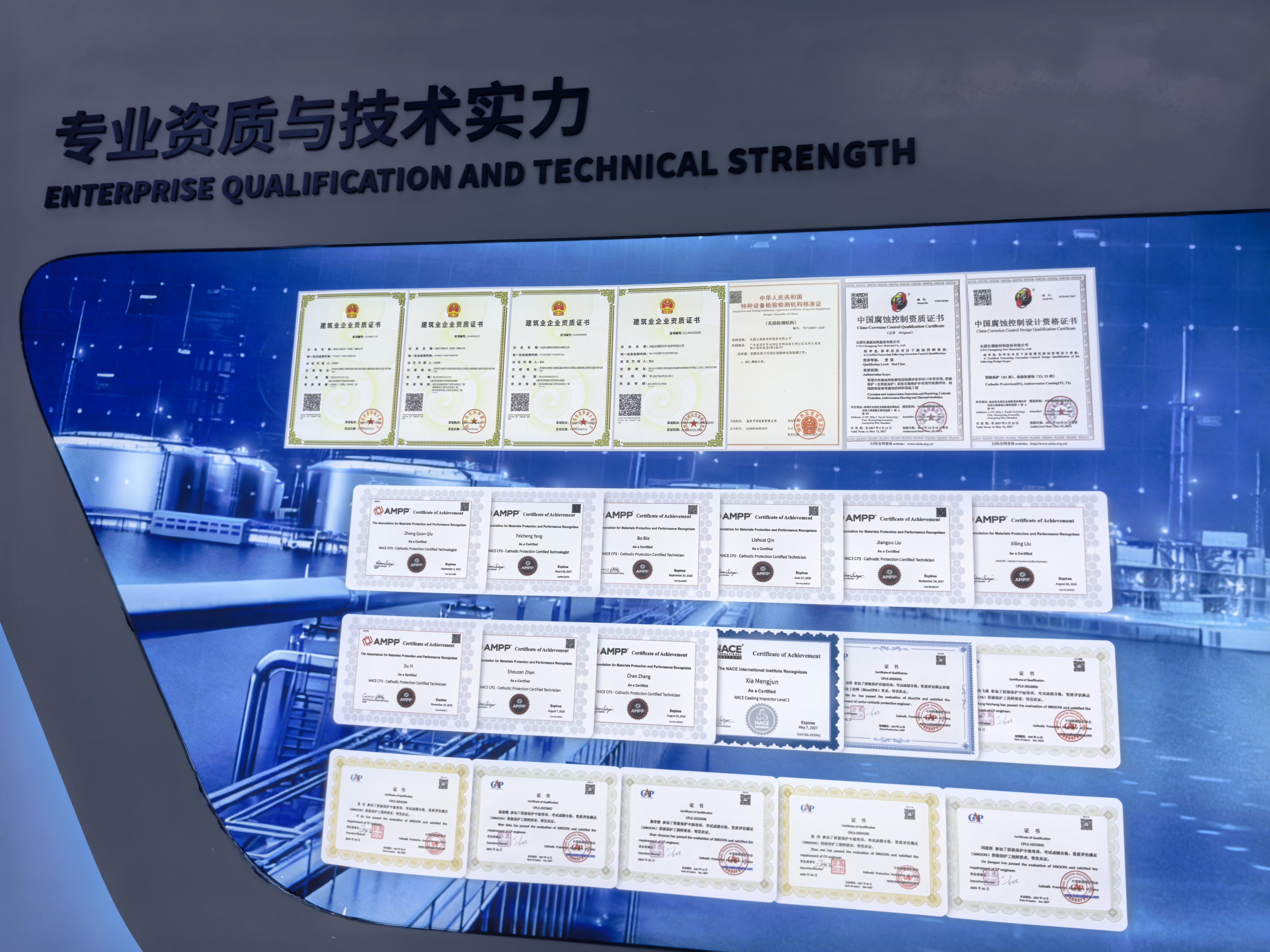
Our certifications and professional memberships reinforce our commitment to international quality guidelines. CYCT is a Member of Council in the Chinese Society for Corrosion and Protection (CSCP), holds Qualification Certificates of Corrosion Protection Construction and Pipeline Detection, and is an active Corporate Member of CAPEC and AMPP.
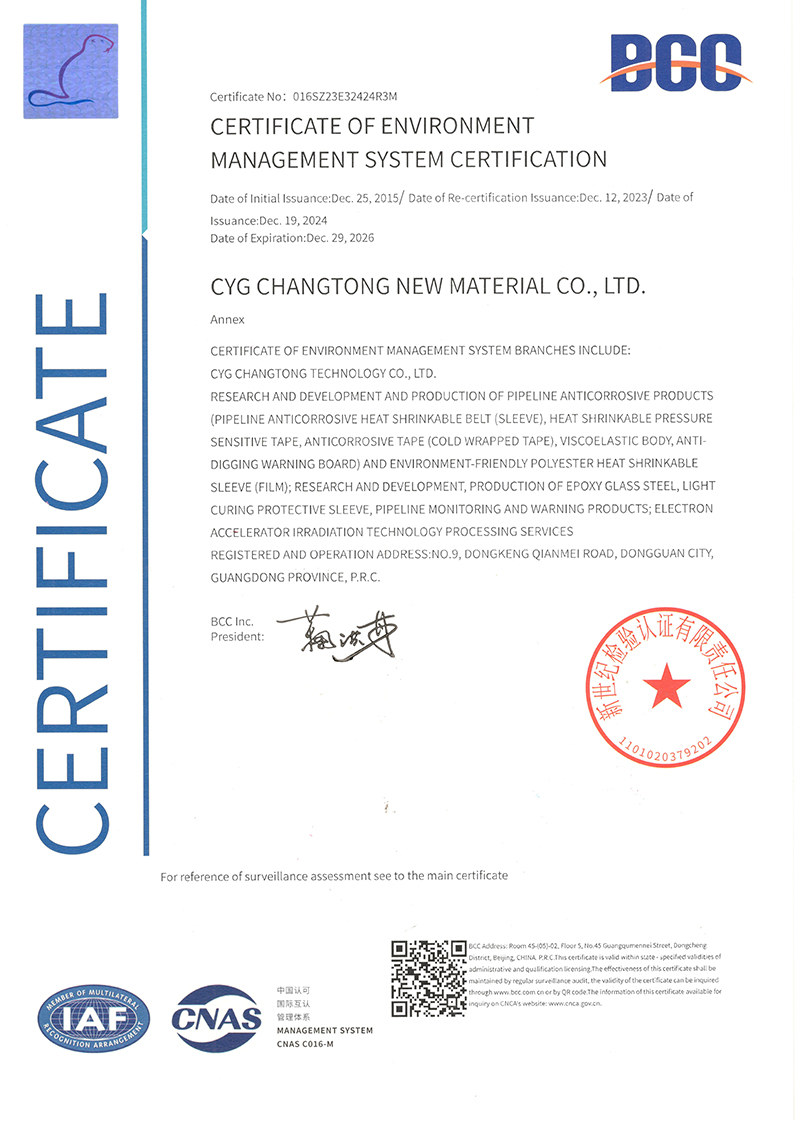
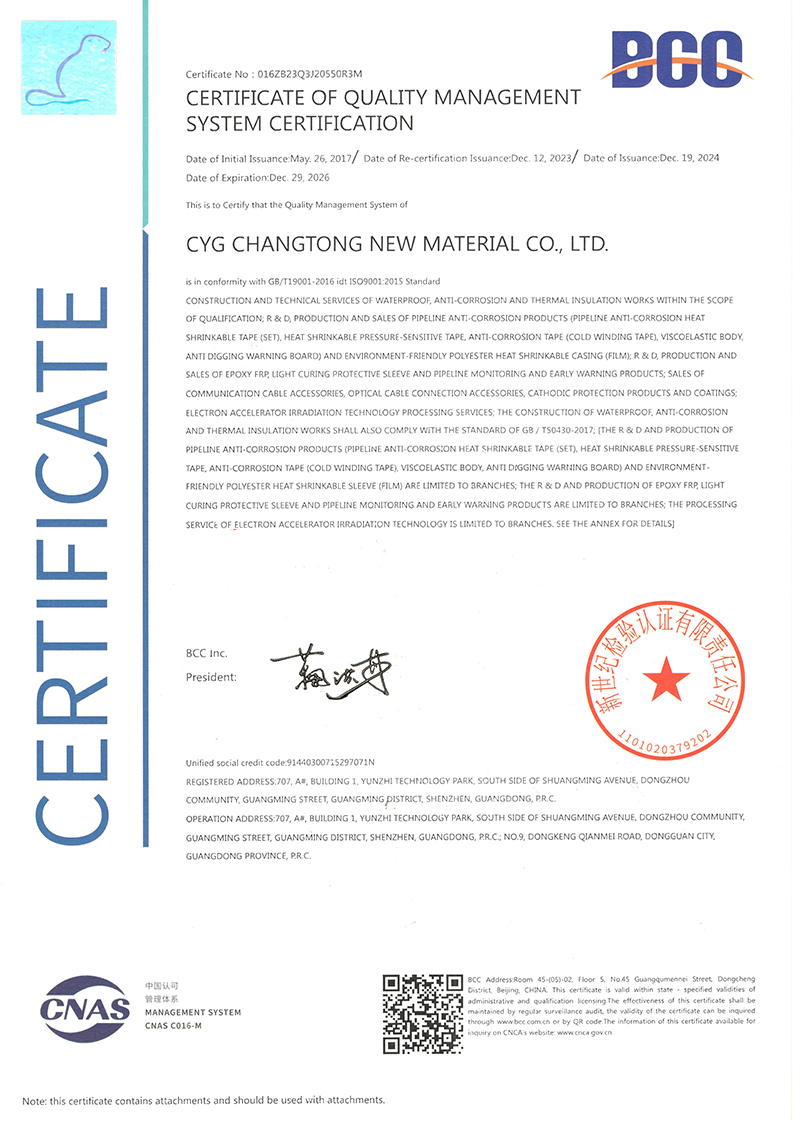
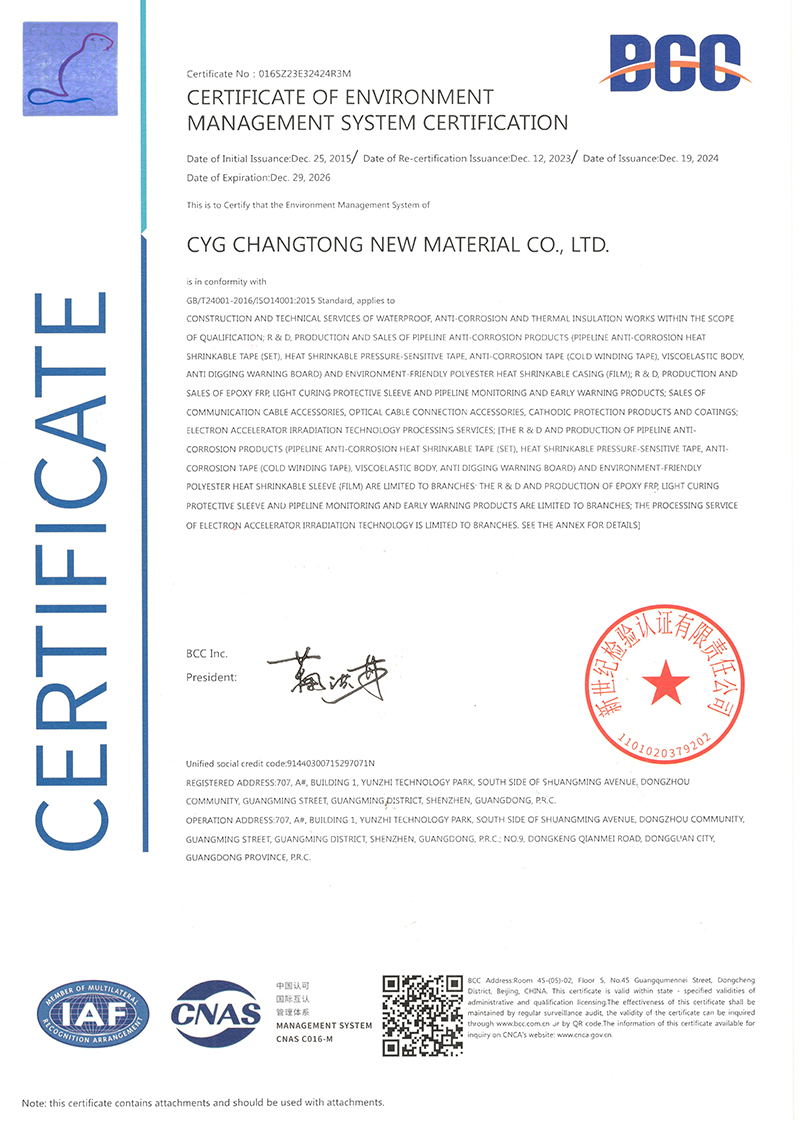
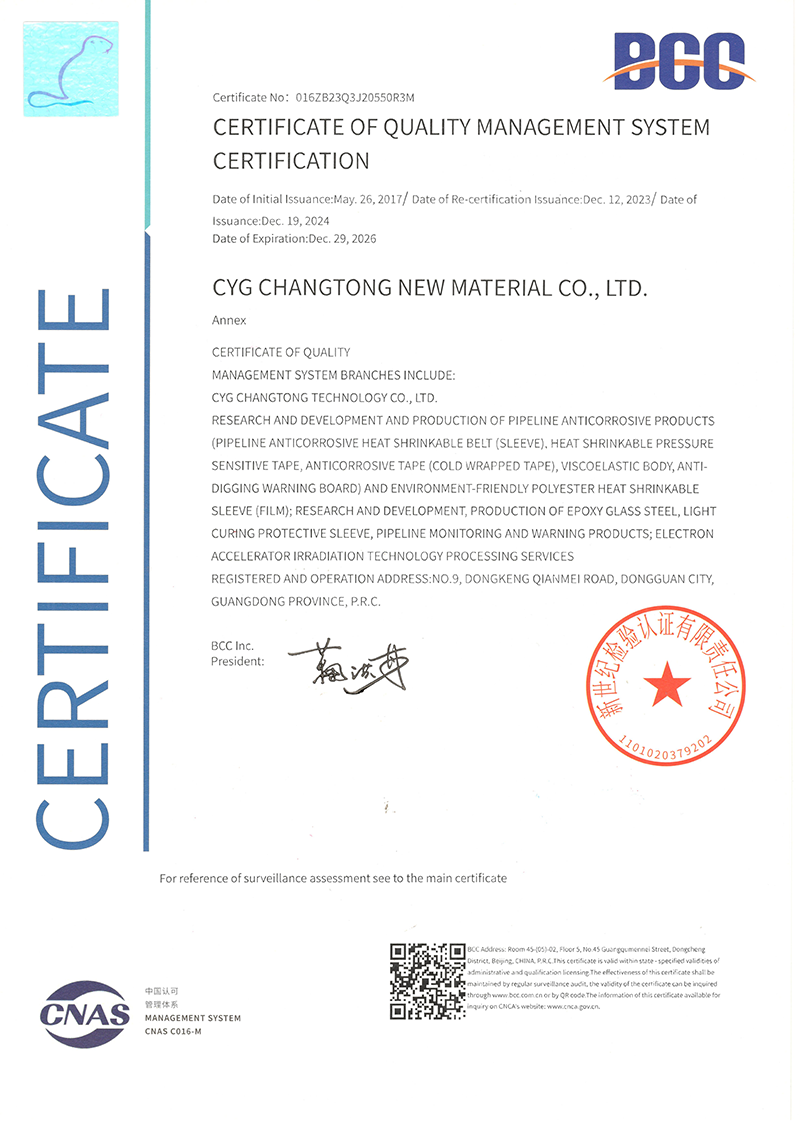
Procuring pipeline reinforcement and corrosion prevention systems for projects in Saudi Arabia requires alignment with international standard specifications and regional oil, gas, and water distribution networks:
Major infrastructure projects across Riyadh, Dammam, and Jeddah reference stringent criteria such as the Saudi Aramco Engineering Standards (SAES-H-002, SAES-H-002V) and SABIC structural protection specifications. CYCT designs and tests its products—ranging from viscoelastic wrap tapes to heat shrinkable tubular sleeves—to meet these parameters. The materials undergo testing for cathodic disbondment (ASTM G8, ASTM G42), thermal aging, peel strength (EN 12068 Class C compatibility), and impact resistance.
For project sites in Riyadh, material availability is essential to maintaining schedule momentum. CYCT’s China Factory 4.0 infrastructure utilizes optimized sea shipping corridors linking major Chinese export hubs with Saudi Arabian ports of entry, including King Abdulaziz Port in Dammam and Jeddah Islamic Port, supported by subsequent domestic transport to the Riyadh dry port. This supply lane ensures reliable material delivery to site warehouses.
Expert insights regarding pipeline reinforcement, anti-corrosion standards, and product selection for Riyadh projects.
A comprehensive line of field joint coatings, PE/PP repair systems, and viscoelastic tapes engineered for industrial and water pipeline networks in Riyadh.
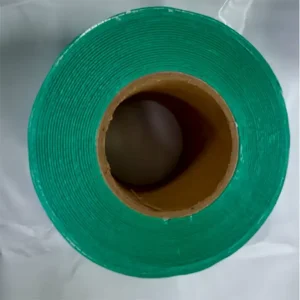
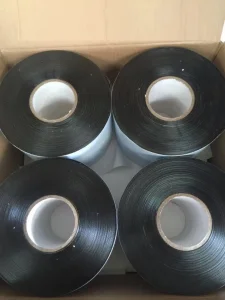
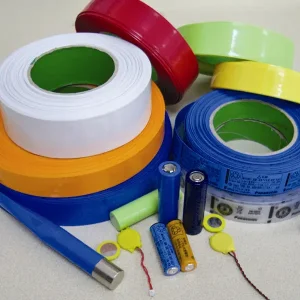
Consult with our technical engineers to obtain tailored material specifications, product samples, and direct factory pricing quotes designed to meet your project specifications.
Send Inquiry Now CYCT
CYCT