Choosing the right Pp Heat Shrinkable Tape can determine whether a package remains secure or loosens during transport. The decision involves more than width and price. Film thickness, shrink temperature, shrink ratio, adhesive performance, and surface compatibility all matter. A tape that performs well on a smooth carton may fail on dusty polypropylene surfaces.
Dr. Susan M. Selke, a packaging materials specialist, offers a practical reminder: “A useful selection starts with the product, not the tape.” Her advice reflects real packaging experience. Before choosing a roll, measure the package surface and identify its material. Check whether the tape must resist moisture, abrasion, sunlight, or temperature changes. A warehouse test can reveal problems that product brochures miss. Small details matter.
This guide presents ten practical tips for choosing Pp Heat Shrinkable Tape with greater confidence. It examines adhesion, tensile strength, elongation, sealing temperature, roll dimensions, storage conditions, and application equipment. It also considers operator safety and consistent quality control. Do not rely on a single successful trial. Test several samples under realistic conditions, including handling, stacking, and transportation. Results may vary.
That is the difficult part.
Some recommendations may need adjustment. A heavier tape is not always stronger, and a cheaper roll may create more waste. Even experienced buyers can overlook humidity or uneven tension. Careful comparison, supplier documentation, and repeat testing provide a more reliable path. The best choice is practical, measurable, and suitable for the actual packaging environment.
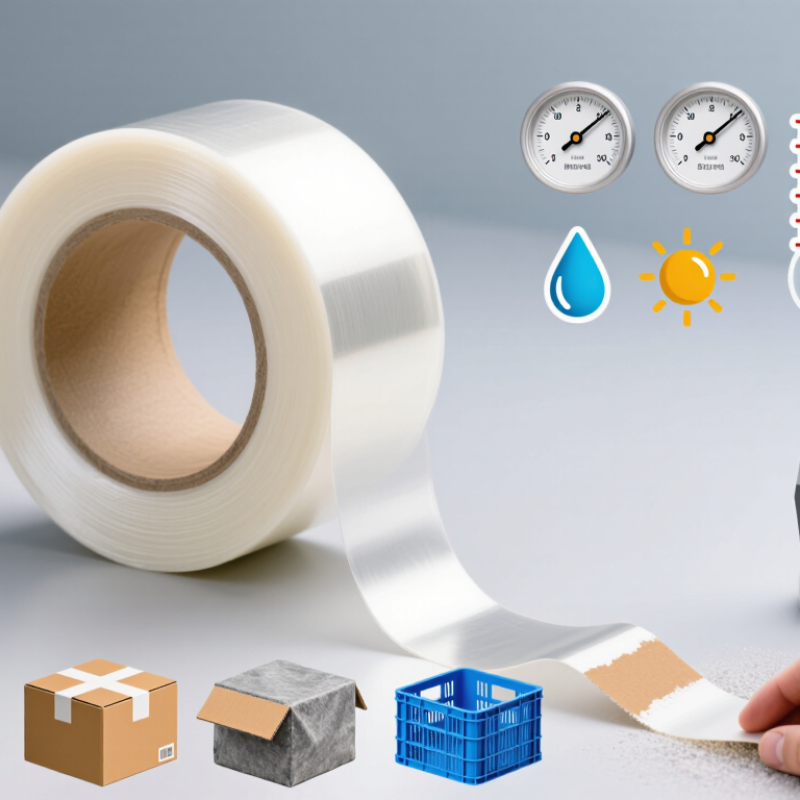
10 Tips for Choosing PP Heat Shrinkable Tape
PP heat shrinkable tape uses an oriented polypropylene film as its carrier. During manufacturing, the film is stretched and cooled under tension. When heated, its polymer structure relaxes and contracts. This creates a tighter wrap around a bundle, cable, or irregular surface. The adhesive then helps the tape stay in position.
In practical use, controlled heat matters. A heat gun can activate the shrink effect, but excessive heat may distort the film or weaken the adhesive. I have seen loose edges caused by rushed heating and dusty surfaces. Clean, dry materials usually provide better contact. Check the tape’s shrink ratio, thickness, width, adhesive type, and operating temperature before choosing it. A stronger adhesive is not always better. Some surfaces need clean removal, while others need long-term holding power.
The tape should fit the object without excessive overlap. Too little overlap may leave gaps after shrinking. Too much can create bulky ridges. Store rolls away from moisture, direct sunlight, and high temperatures. Test a small section before full application. This simple step often reveals unexpected curling, poor bonding, or uneven contraction. PP tape is useful, but it is not a perfect solution for every surface. Its performance depends on material compatibility, heating control, and careful application.
A practical comparison guide for evaluating polypropylene heat-shrinkable tape by material, shrink behavior, temperature performance, adhesion, and application requirements.
| No. | Selection Dimension | What to Check | Typical Technical Guidance | Why It Matters |
|---|---|---|---|---|
| 1 | Understand the PP Structure | Confirm that the backing is polypropylene and identify whether the tape includes a heat-activated adhesive, pressure-sensitive adhesive, or a separate sealing layer. | Polypropylene is a lightweight thermoplastic with low moisture absorption and a melting range commonly around 160–170°C, although the finished tape may activate or shrink at a lower temperature. | The backing and adhesive system determine shrink performance, bonding behavior, chemical resistance, and safe processing temperature. |
| 2 | Match the Shrink Ratio | Compare the supplied width, final recovered width, and the shape or diameter of the item being wrapped. | Shrink ratios such as 2:1 or 3:1 are common in heat-shrink products, but tape construction can vary. Use the product’s measured recovery data rather than relying on the ratio alone. | A suitable ratio allows the tape to conform tightly without leaving gaps, excessive overlap, or excessive material buildup. |
| 3 | Check the Shrink Activation Temperature | Review the recommended heating range, minimum recovery temperature, maximum exposure temperature, and heating method. | Many heat-shrink materials begin recovering in the approximate range of 90–150°C, but the actual range depends on the PP formulation, adhesive, coating, and construction. | The tape must shrink reliably while remaining safe for the substrate, nearby insulation, connectors, coatings, and production equipment. |
| 4 | Evaluate Long-Term Temperature Resistance | Look for continuous-use and short-term temperature ratings after installation, not only the heat application temperature. | Polypropylene products are generally intended for moderate-temperature applications. Confirm the manufacturer’s tested continuous-use rating because prolonged heat can reduce dimensional stability and strength. | A tape that survives installation heat may still soften, creep, or lose mechanical performance during long-term service. |
| 5 | Select the Correct Adhesive System | Check adhesion to the actual substrate, including metals, plastics, cable jackets, painted surfaces, and low-surface-energy materials. | Heat-activated adhesives can improve sealing during recovery, while pressure-sensitive adhesives provide immediate tack. Adhesion should be verified after heating, cooling, and environmental aging. | The adhesive controls sealing, strain relief, resistance to moisture ingress, and the tape’s ability to remain in place under vibration. |
| 6 | Verify Mechanical Strength | Review tensile strength, elongation, tear resistance, puncture resistance, thickness, and flexibility. | A thicker tape generally offers greater puncture and abrasion protection, while thinner tape improves conformability. Compare values using the same test method and direction. | The selected balance prevents splitting during application while allowing the tape to follow bends, joints, and irregular surfaces. |
| 7 | Assess Environmental Resistance | Consider exposure to water, humidity, oils, fuels, cleaning agents, salt spray, ultraviolet light, and outdoor weathering. | PP has low water absorption and generally good resistance to many aqueous environments, but performance against specific chemicals and UV exposure must be confirmed through compatibility testing. | Environmental resistance helps prevent swelling, embrittlement, adhesive failure, discoloration, and loss of sealing performance. |
| 8 | Confirm Electrical Requirements | Review dielectric strength, insulation resistance, volume resistivity, tracking behavior, and compatibility with the system voltage. | Do not assume that a PP backing automatically qualifies the tape as an electrical insulation product. Required ratings depend on thickness, adhesive, construction, and test conditions. | Electrical properties are critical for cable wrapping, splice protection, coil insulation, and other applications where leakage or breakdown could create a safety hazard. |
| 9 | Review Fire and Compliance Data | Identify required flammability, smoke, halogen, environmental, and application-specific compliance requirements. | Possible evaluation methods include relevant UL 94 material flammability testing, IEC 60332 cable-flame testing, RoHS substance restrictions, and REACH substance communication. The correct requirement depends on the end use. | Compliance documentation supports product qualification and helps ensure suitability for transport, electronics, construction, and industrial applications. |
| 10 | Test Application and Quality Consistency | Run a sample installation using the intended overlap, heating tool, heating speed, surface preparation, and cooling time. | Inspect recovery uniformity, wrinkles, edge lifting, adhesive flow, voids, bond strength, and dimensional change. Request batch-level data for width, thickness, shrink ratio, and visual defects. | A laboratory specification alone cannot predict production results. Process trials reveal whether the tape can be applied consistently and economically. |
Technical note: Values shown are general industry guidance rather than universal specifications. Final selection should be based on the tape’s current technical data sheet, applicable standards, substrate compatibility, and validation under actual service conditions.
Check the polypropylene grade, thickness, flexibility, and resistance to oils, moisture, and common chemicals. Thickness affects insulation and heat transfer. A thicker tape may protect better but shrink unevenly. Test the actual application.
Compare the tape’s shrink ratio with the joint diameter and shape. Too little recovery can leave gaps. Too much recovery may create wrinkles or edge stress. Measure the cooled tape, not only its appearance.
Confirm the activation range before testing production parts. The tape should shrink without damaging cables, coatings, or nearby plastics. Use a calibrated oven or controlled heating method. Touch-based heating feels practical, but it is inconsistent.
Test adhesion on the actual substrate, including slightly textured surfaces. Clean and dry the surface, then apply equal pressure with a roller. Check peel behavior after 24 and 72 hours. Look for residue, edge lifting, and stretched adhesive.
Match dielectric strength, volume resistance, working voltage, and temperature performance to the application. Long-term heat aging is also important. A tape can bond well but still provide insufficient insulation. Check independent test data where possible.
Place taped samples in a calibrated oven at the expected service temperature, adding a safety margin. Inspect shrinkage, blistering, discoloration, and adhesive flow while warm and after cooling. Temperature changes can expose hidden failures. Repeat the test with different overlap lengths.
Simulate vibration, moisture, abrasion, and repeated heating cycles. Check whether the tape remains tight around joints and resists tearing at the edges. Outdoor samples also need ultraviolet and water-absorption testing. Short tests may look reassuring, but they can mislead.
Keep surfaces free from fingerprints and dust before application. Record heating speed, overlap length, recovery, and cooling results. Verify production batches because performance can vary slightly. I once assumed a higher shrink ratio was always better. That assumption failed.
Choosing the right Pp Heat Shrinkable Tape starts with understanding how it works. Made from polypropylene, the tape contracts when exposed to controlled heat, helping secure, bundle, seal, or protect items. Before selecting a product, examine key material properties such as tensile strength, flexibility, thickness, shrink ratio, temperature range, and resistance to moisture, abrasion, and chemicals. The tape size and shrink performance should match the object’s shape, dimensions, and application method to ensure even coverage without excessive tension or wrinkles.
Reliable performance also depends on testing adhesion, durability, and heat resistance under realistic conditions. Check whether the tape bonds securely to the intended surface, remains stable during handling, and withstands the required operating temperature. For safe and consistent use, follow proper heating procedures, avoid overheating, and store the tape in a clean, dry environment away from direct sunlight and extreme temperatures. Finally, inspect packaging, surface quality, dimensions, and batch information before use to support dependable results.

 CYCT
CYCT